The question usually comes up after a rough week, not a calm one. Your dog drags you down the sidewalk, jumps on visitors, ignores you in the backyard, or turns dinner prep into a food-stealing mission. At that point, asking is in home dog training worth it is really another way of asking, can this get better in real life, not just during a class.
For many dog owners, the answer is yes. But not because in-home training is automatically better in every situation. It is worth it when the problems you want to fix are happening in your home, on your walks, and in your day-to-day routines. That is where behavior lives, and that is where good training has to work.
Why in-home training often works better
A lot of common behavior issues are tied to context. Dogs do not generalize as neatly as people expect. A dog who can sit nicely in a quiet training facility may still lose control when the doorbell rings at home. A dog who listens in class may still pull hard on the familiar route past the neighbor’s house.
That is one of the biggest reasons in-home training can be worth the investment. It lets the trainer see the actual setup, timing, distractions, and habits that are shaping your dog’s behavior. Instead of guessing, they can work with what is really happening.
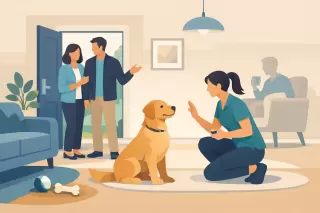
If your dog jumps when guests enter, steals food from the kitchen, bolts through doorways, or stops listening the second they reach the front yard, those are not abstract obedience problems. They are household patterns. Training inside that environment is often faster and more relevant because the lesson matches the problem.
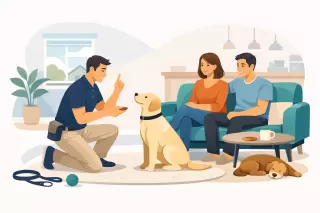
There is also a human side to this. Many owners are not struggling because they do not care. They are struggling because they need someone to show them what to do in the moment, in their own space, with their own dog. Personalized coaching can make the difference between hearing advice and actually using it.
Is in-home dog training worth it for every dog?
Not always. Some dogs do perfectly well in group classes, especially if the owner mainly wants basic manners practice, social exposure, or a more budget-friendly starting point. Group settings can be useful for dogs that are comfortable around other dogs and people, and for owners who enjoy a classroom structure.
But there are clear situations where in-home work tends to offer more value.
Puppies often benefit because the training can focus on house rules from the start. That includes nipping, crate routines, settling, greeting people politely, and learning how to behave around the normal flow of family life. It is one thing for a puppy to perform a cue in a hall full of treats and distractions. It is another for that puppy to learn what happens when kids come through the door or when someone drops food in the kitchen.
Reactive, nervous, or easily overstimulated dogs also tend to do better with one-on-one attention. A busy class can be too much. Instead of learning, some dogs spend the whole session coping. In-home training removes that pressure and gives the dog a better chance to succeed.
It can also be a strong fit for small dogs, senior dogs, and families with packed schedules. When the trainer comes to you, training becomes easier to fit into real life. That convenience matters more than people think. Consistency is what changes behavior, and consistency is easier when the process is practical.
What you are really paying for
When owners compare in-home training to group classes, the first difference they notice is usually price. One-on-one training costs more, and that is fair to acknowledge. The real question is whether the higher cost leads to better results for your situation.
With in-home training, you are not paying just for time. You are paying for individualized observation, a plan built around your dog’s temperament, and coaching tailored to your household. That includes your timing, your routines, your questions, and the exact behaviors that are making life harder.
That personalization can save time and frustration. Instead of spending weeks trying generic advice, you are working on the issues that actually matter in your home. For many families, that is where the value shows up.
It is also worth considering the cost of not addressing behavior early. Pulling can become stronger. Jumping can become a safety issue. Poor recall can become dangerous. Guarding, reactivity, or constant chaos around visitors can strain the entire household. Training is an investment, but unmanaged behavior has a cost too.
The problems in-home training handles especially well
Some behavior issues respond particularly well to in-home coaching because they depend so heavily on location, timing, and family habits.
Door manners are a good example. If your dog explodes when someone knocks, the trainer can work with your entryway, your routine, and your dog’s exact trigger point. The same goes for food stealing, counter surfing, barking out the window, poor settling in the evening, and ignoring cues in the backyard.
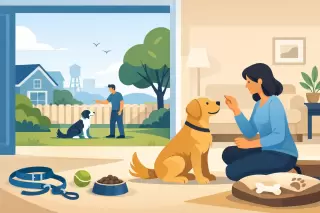
Leash walking can also improve through in-home training, especially when sessions include your neighborhood. The dog is not learning on an artificial route. They are learning where you actually walk, with the smells, sounds, and distractions that normally throw them off.
Recall is another big one. Owners often say their dog knows come, but only when nothing interesting is happening. That usually means the behavior is not reliable yet in real-world settings. Working at home and around familiar distractions helps build a more practical response.
What makes in-home training worth it or not worth it
The value depends on quality and follow-through, not just the format. A good in-home trainer should do more than run through commands. They should explain why the behavior is happening, show you how to respond, adjust the plan to your dog, and make the steps realistic for your household.
Owner involvement matters too. No trainer can wave a hand and permanently fix behavior in one visit. Real progress comes from repetition, clarity, and consistency between sessions. In-home training tends to work well because it teaches both the dog and the owner, but it still requires practice.
It may not feel worth it if someone expects instant results without changing routines. On the other hand, it often feels very worth it when the owner wants a clear plan and is ready to apply it in daily life.
That is why one-on-one home visits can be so effective. The trainer is not teaching your dog in isolation. They are teaching your whole household how to communicate more clearly.
Is in-home dog training worth it compared to group classes?
This really comes down to your goals.
If you want a lower-cost introduction to obedience and your dog can focus around other dogs, a group class may be enough. It can be helpful for practicing around distractions and learning basic handling skills.
If your main concern is behavior that happens in your house, on your street, or during your routine, in-home training usually offers more direct value. It is less generalized and more specific. That often means fewer wasted steps.
There is also the emotional factor. Some owners feel embarrassed in group settings if their dog is loud, impulsive, or not keeping up. In-home training removes that pressure. You can ask questions freely, move at the right pace, and focus on progress instead of comparison.
For many Durham Region families, that combination of convenience and customization is exactly why a service like K9 Manners makes sense. Training becomes easier to stick with because it is built around real life, not around getting everyone into the same room at the same time.
Signs it is probably worth it for you
If your dog behaves one way in theory and another way at home, in-home training is worth serious consideration. The same is true if your biggest frustrations involve guests, doorways, leash walking, stealing food, not listening outside, or general household chaos.
It is also a strong option if you have a puppy and want to set expectations early, or if your dog is too distracted, anxious, or reactive for a busy class environment.
Most of all, it is worth it if you want training to improve everyday living, not just produce a few nice moments during a lesson. Good training should make mornings smoother, walks calmer, visitors less stressful, and communication clearer.
That is the real test. Not whether your dog can perform on cue for a trainer, but whether life with your dog starts feeling easier, more predictable, and more enjoyable.
If that is the goal, in-home dog training is often money well spent. The best version of training is not the one that looks impressive for an hour. It is the one that still works when the doorbell rings, dinner is on the stove, and your dog has a choice to make.