Your dog sits perfectly in the living room, then forgets everything the second the doorbell rings. Or maybe walks start with good intentions and turn into pulling, zigzagging, and frustration before you reach the corner. That is exactly why many owners start looking for the best in home dog training. Real behavior problems usually happen in real moments, inside your daily routine, not in a controlled classroom.
For many families, the issue is not that their dog cannot learn. It is that the training has not been taught where the behavior actually breaks down. A dog that jumps on guests at the front door needs help at the front door. A dog that steals food from the kitchen counter needs training in the kitchen. When training happens in the home, it becomes easier to connect the lesson to the problem and easier for owners to stay consistent after the session ends.
What makes the best in home dog training different
The best in home dog training is not simply a trainer showing up at your house instead of asking you to drive somewhere. The real difference is context. Dogs do not automatically apply a lesson from one place to another. They learn patterns based on environment, timing, and repetition.
That matters more than most people realize. Group classes can be helpful for some dogs, especially those that already have a decent foundation and are comfortable around other dogs and people. But if your dog gets overstimulated, distracted, anxious, or reactive, a group setting can work against the very behavior you are trying to improve.
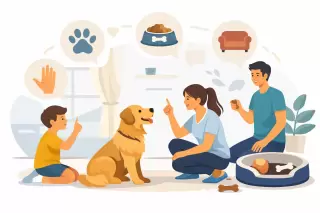
In-home training removes many of those extra variables. Your dog is learning in the spaces where they eat, greet visitors, rest, bark out the window, and test boundaries. That allows the trainer to see what is really happening instead of guessing based on a description.
Why behavior problems are easier to fix at home
Owners often describe the same pattern. Their dog seems smart, affectionate, and capable, but everyday situations still feel chaotic. Jumping, leash pulling, barking, food stealing, ignoring recall, and selective listening are all common issues, and they usually come with a lot of owner frustration.
Home-based training helps because it deals with the full picture. The trainer can observe how the dog responds to the layout of the home, the timing of meals, household routines, family members, distractions, and the way commands are given. Sometimes the problem is not stubbornness at all. It may be inconsistent cues, accidental reinforcement, or a lack of structure around the moments that trigger the behavior.
That kind of detail is hard to catch in a class. It becomes much easier when the trainer can watch your dog at the front window, on the stairs, near the kitchen, or during the exact moment a guest walks in.
The biggest advantage is personalized coaching
The best training plans are not one-size-fits-all because dogs are not one-size-fits-all. A young high-energy doodle needs a different approach than a timid rescue dog. A small dog that has learned to rule the couch has different needs than a teenage shepherd who has no idea how big he is.
Personalized in-home training gives you room to work at the right pace. Some dogs need confidence-building before obedience improves. Some need clearer boundaries. Some need owners to tighten up timing and consistency more than the dog needs anything else.
This is also where many first-time dog owners feel relief. Instead of trying to piece together advice from videos, friends, and trial and error, they get direct instruction based on their own dog and their own household. That clarity can save a lot of time and a lot of mixed signals.
What to look for when choosing the best in home dog training
Not every in-home service delivers the same value. If you are comparing options, look past the basic promise of obedience training and pay attention to how the process is handled.
A strong in-home trainer should focus on practical behavior change, not just whether your dog can perform a cue once or twice during a session. You want someone who can explain why the behavior is happening, how to respond in the moment, and what the follow-through should look like between appointments.
It also helps to look for a trainer who works one-on-one, adapts to your dog’s age and temperament, and teaches in a way that owners can realistically maintain. Fancy language does not matter much if the plan falls apart by the next morning.
Professional credibility matters too. Experience, training background, and a clear service process all help build trust. So does local familiarity. A trainer who regularly works with families in your area often has a better sense of the schedules, home setups, and lifestyle needs that shape daily training.
When group classes may not be the best fit
There is nothing wrong with group classes in the right situation. But they are not ideal for every dog, and many owners wait too long to admit that. If your dog is overwhelmed by other dogs, too excited to focus, or already practicing problem behavior in busy environments, a class can become more about managing chaos than building skills.
Puppies can struggle with this too. Early training should build confidence and communication, not flood a puppy with distractions they are not ready to handle. The same goes for smaller dogs that get intimidated easily or reactive dogs that become more stressed in shared spaces.
In-home training offers a calmer starting point. Once the dog understands expectations and the owner has better control, distractions can be added gradually. That progression often leads to stronger long-term results than starting with too much stimulation too soon.
The owner is part of the training plan
One reason in-home training works so well is that it teaches the humans as much as the dog. That is not a criticism. It is just reality. Dogs learn through repetition, timing, and consistency, which means owner habits matter.
A good trainer will not just correct the dog and leave. They will coach the owner on leash handling, tone, timing, rewards, boundaries, and how to respond when the dog gets it wrong. This changes training from a one-time event into a communication system the whole household can use.
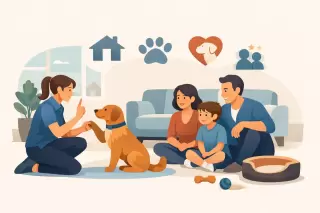
That matters in homes with kids, multiple adults, or mixed routines. If one person allows jumping and another corrects it, the dog gets confusing information. If everyone learns the same approach in the home where the behavior happens, progress tends to come faster and stick better.
What real progress usually looks like
The best in home dog training does not promise a magically perfect dog overnight. That is usually a red flag. Good training is measurable, but it is still a process.
At first, progress may look small. Your dog pauses before rushing the door. Walks become less of a wrestling match. Recall improves in the yard before it improves at the park. Guests can enter with less chaos. Meals become calmer. These practical wins matter because they change daily life.
Over time, those small improvements add up to something bigger – a dog that understands expectations and an owner who feels more confident handling real situations. That is the kind of result most families actually want. Not a performance, but a more peaceful home.
Why local, one-on-one support matters
For dog owners in busy households, convenience is not a bonus. It is part of what makes training realistic. When sessions happen at home and around your actual routine, it becomes much easier to stay consistent.
That is one reason businesses like K9 Manners appeal to families across Durham Region. The one-on-one format allows training to focus on what owners are really dealing with, whether that is door manners in Whitby, leash issues in Oshawa, a new puppy in Ajax, or unreliable recall in a larger yard farther out. The behavior is personal, so the coaching should be personal too.
If you are trying to choose the right training path, ask yourself a simple question. Where does your dog struggle most? If the answer is in your kitchen, at your front door, on your street, or during your family’s daily routine, then home-based coaching is often the smartest place to start.
The best training is not the one that looks impressive on paper. It is the one that helps your dog listen better, helps you feel more confident, and makes everyday life at home feel easier.