The first sign that a puppy needs training usually is not a dramatic behavior problem. It is the small daily stuff that starts wearing you down – jumping when the doorbell rings, grabbing socks, ignoring their name, pulling on the leash, or turning every meal into a chance to beg or steal. That is why pickering puppy obedience training works best when it focuses on real life, not just whether a puppy can sit for a treat in a distracting class.
For most families, the goal is not a perfect performance. It is a puppy that listens, settles, and fits more smoothly into the household. Good training should make mornings easier, walks less frustrating, and visits from friends far less chaotic. When you start with that mindset, obedience becomes a practical communication system, not a checklist of commands.
What puppy obedience should actually teach
A young puppy does not need a long list of fancy cues. What they need is a foundation they can use every day. That usually begins with name recognition, attention to the owner, coming when called, walking politely, staying off people, settling in the home, and learning how to respond calmly around food, visitors, and movement.
Just as important, owners need to learn timing, consistency, and how to read their puppy before things escalate. A lot of obedience problems are really communication problems. The puppy is not trying to be stubborn. More often, they are overexcited, confused, under-practiced, or rewarded by accident.
That is why early training matters. If a puppy learns that jumping gets attention, pulling gets them where they want to go, and ignoring recall has no downside, those habits become stronger very quickly. The longer those patterns continue, the harder daily life gets.
Why in-home pickering puppy obedience training makes sense
Puppies do not misbehave in a vacuum. They do it in your kitchen, at your front door, on your sidewalk, and during the rushed parts of your day. Training in those same places gives you a much more honest picture of what is happening and what needs to change.
A group class can help some dogs, but it is not always the best starting point. For a very young puppy, a shy dog, a highly distracted dog, or a family already feeling overwhelmed, the class environment can add too much stimulation too soon. Instead of learning, the puppy may spend most of the session reacting to other dogs, people, sounds, and motion.
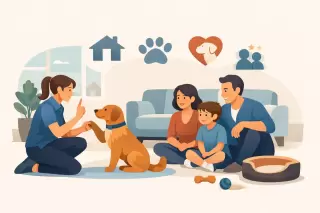
In-home training removes a lot of that noise. It allows the trainer to see how your puppy behaves where the problem actually happens. If your puppy rushes guests, steals food from the kids, barks in the crate, or melts down on the leash right outside the driveway, those details matter. They shape the training plan.
That individualized approach is often what helps progress happen faster. The plan can be adjusted to your puppy’s age, confidence level, energy, breed tendencies, and your household routine. A retired couple, a busy family with children, and a first-time owner in a condo may all need something different, even if their puppies are the same age.
The most common issues new puppy owners face
Most owners are not dealing with one big problem. They are dealing with five small ones happening all day long. Jumping is one of the most common. It often looks friendly, but it quickly becomes frustrating when a puppy launches at family members or visitors every time someone walks in.
Leash pulling is another early complaint. Puppies learn fast that pulling gets them closer to smells, people, and exciting movement. If that pattern is not addressed early, walks become a tug-of-war instead of something enjoyable.
Recall is also a big one. Many puppies come running inside the house and then suddenly seem deaf outdoors. That is normal, but it still needs structured work. Coming when called has to become rewarding, clear, and consistent before distractions are added.
Owners also struggle with mouthing, food stealing, barking for attention, and selective listening. None of these issues means you have a bad puppy. It usually means your puppy is doing what works, and the training needs to make better choices easier and more rewarding.
What good training looks like in real life
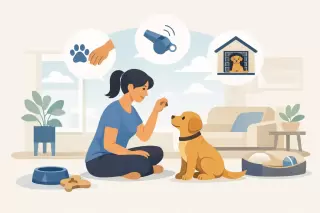
Real obedience is not about repeating commands louder and louder until the puppy gives in. It is about teaching the behavior clearly, rewarding it at the right moment, and practicing it in the situations where it matters.
Take “sit,” for example. On its own, it is not the goal. The value of sit is that it can replace jumping at the door, lunging for the food bowl, or bouncing at the end of the leash. The same is true for place training, recall, and waiting politely. These skills are useful because they solve household stress.
Good training also accounts for puppy development. Young puppies have short attention spans. They get tired, overstimulated, and distracted easily. That means sessions should be short, clear, and repeated often. Owners sometimes worry that progress is slow, but for puppies, consistency matters more than intensity.
There is also a balance to strike. Training should be positive and encouraging, but it still needs structure. Puppies do best when expectations are fair and consistent. If one person allows jumping, another person corrects it, and a third laughs and pets the puppy, the dog gets mixed messages. That is why owner coaching is such a big part of the process.
Why one-on-one coaching helps owners as much as puppies
A big reason obedience work stalls is not that the dog cannot learn. It is that the owner is unsure when to reward, how to interrupt unwanted behavior, or how to practice between sessions. That is completely normal, especially for first-time puppy owners.
One-on-one coaching gives you room to ask the practical questions that do not always fit into a class setting. What do you do when guests arrive early and the puppy is already excited? How do you handle leash work when your street is busy? What if your puppy listens to one family member and ignores the others? These are the details that shape success.
It also helps to have someone see your home setup. Sometimes a behavior issue is partly a management issue. The puppy has too much access, too little structure, or too many chances to rehearse bad habits. Small changes in routine, boundaries, and timing can make obedience training much more effective.
This is where a service like K9 Manners stands out. In-home sessions can focus on the exact problems your family is living with, instead of forcing your puppy into a one-size-fits-all program.
How to get better results from puppy training
If you are starting pickering puppy obedience training, aim for progress you can use every day. Practice before the puppy is too excited, not after things have already fallen apart. Reward the behaviors you want to see again. Keep sessions short enough that your puppy can stay successful.
It also helps to work on one or two priorities at a time. Trying to fix leash pulling, recall, jumping, barking, crate resistance, and mouthing all at once can leave both you and your puppy frustrated. A better plan is to address the behaviors that affect daily life the most, then build from there.
Expect some uneven days. Puppies go through growth stages, testing phases, and bursts of overexcitement. That does not mean the training is failing. It means your puppy is still learning, and your job is to stay consistent through the messy middle.
The best obedience training leaves you with more than a dog who knows commands. It gives you a calmer routine, more confidence, and a better sense of how to guide your puppy through everyday situations. If your puppy is already turning simple moments into stressful ones, getting help early can change the whole direction of life together.
A well-trained puppy does not happen by accident. It happens when clear teaching meets the real world your dog lives in every day.