A lot of owners start comparing private training vs board and train when they are tired of repeating the same cue ten times, getting dragged down the street, or apologizing every time the dog jumps on a visitor. At that point, the question is not just which option sounds easier. It is which option will actually help your dog behave better in your real daily life.
That is the part many people miss.
Both approaches can help, but they work in very different ways. One puts the trainer directly into your home and routine. The other removes the dog from that routine for a period of time and focuses on training elsewhere. If your goal is lasting behavior change, the setting, the transfer of skills, and your own role in the process matter more than the sales pitch.
What private training vs board and train really means
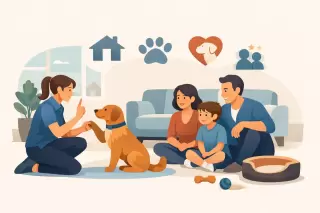
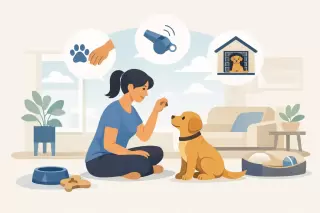
Private training usually means one-on-one sessions with a trainer who works with you and your dog together. In many cases, that happens in your home, where the problem behaviors actually show up. If your dog steals food from the kitchen counter, loses focus at the front door, barks at guests, or ignores recall in the backyard, those situations can be addressed where they happen.
Board and train means your dog stays with a trainer or at a training facility for a set period of time, often one to several weeks. During that stay, the trainer works directly with the dog without you present for most of the process. At the end, you usually receive a handoff session or follow-up lessons to learn what the dog has been taught.
Neither model is automatically better in every case. The better choice depends on your dog, your household, your schedule, and the kind of result you expect.
Why the training environment matters
Dogs do not generalize as easily as people think. A dog who sits nicely in a trainer’s facility may still struggle to sit calmly when your kids are running through the hallway or when the doorbell rings at home. That does not mean the training failed. It means dogs learn in context.
This is one of the biggest differences in private training vs board and train. Private sessions let the trainer coach behavior inside the exact environment that triggers it. Your dog is not learning in a quiet, controlled setting and then being asked to transfer those skills later. The learning happens in the kitchen, at the front door, on your street, and during your normal routines.
That can be especially helpful for everyday issues like leash pulling, jumping, barking out the window, poor manners around food, and selective listening. These are not abstract obedience problems. They are household problems. Training tends to stick better when it is tied to the places and patterns your dog deals with every day.
The biggest advantage of private training
The strongest benefit of private training is not just personalization for the dog. It is coaching for the owner.
Most behavior issues improve when the human side becomes clearer and more consistent. Timing, tone, body language, reinforcement, boundaries, and follow-through all matter. In private sessions, you are not watching from the sidelines while someone else trains your dog. You are learning how to communicate in a way your dog understands.
That matters because you are the one your dog lives with.
If your dog listens beautifully to a trainer but not to you, daily life does not get easier. Private training closes that gap by teaching both ends of the leash. It also allows the trainer to adjust the plan for your household. A retired couple, a busy family with young children, and a first-time puppy owner may all need different strategies, even if the behavior looks similar on the surface.
Where board and train can make sense
Board and train is not a bad option by definition. In some cases, it can be useful.
A board and train program may appeal to owners who feel overwhelmed and want professional help creating a strong foundation quickly. It can also help when a dog needs intensive structure, when the owner has temporary time limitations, or when early skill-building under an experienced trainer would be beneficial.
For some dogs, especially high-energy dogs who need a consistent routine and daily repetition, that concentrated work can produce visible progress fast. Owners often like the idea of dropping off a chaotic dog and picking up one with better manners.
The trade-off is that the dog is learning with the trainer first, not with you first. That means success depends heavily on how well the training transfers back into your home. If the follow-up process is weak, or if the owner expects the dog to return fully trained without changing anything at home, the results can fade.
The hidden downside of board and train
The biggest misconception about board and train is that it solves the whole problem for you.
It can jump-start training, but it does not remove the need for owner involvement. Dogs do not come home with a permanent software update. They come home with new patterns that still need to be maintained, practiced, and understood by the people living with them.
That is where frustration can creep in. An owner sees progress at pickup, but a week later the dog is back to ignoring cues in the kitchen or getting overexcited at the door. Often, that happens because the dog has returned to the same environment with the same triggers and the same household habits, but without enough guided support for the humans.
There is also the question of fit. Not every dog thrives away from home. Sensitive dogs, anxious dogs, very young puppies, and dogs who struggle with unfamiliar settings may find the boarding aspect stressful. Stress does not automatically ruin training, but it can affect how comfortably and consistently a dog learns.
Cost, convenience, and expectations
Board and train often looks convenient because someone else handles the daily sessions. For busy owners, that can sound like a relief. But it usually comes at a higher upfront cost, and the value depends on the quality of the transfer back to your life.
Private training may feel slower because you are part of every lesson, but that involvement is often the reason it holds up better long term. You are building skills while your dog is building skills. That means the progress belongs to your household, not just to the trainer’s handling.
Convenience also depends on what kind of inconvenience you want to avoid. Some owners want to avoid travel, rigid class times, or chaotic group environments. In-home private sessions can be easier to maintain because they fit around real schedules and focus directly on the situations causing stress.
Which dogs usually do best with private training
Private training is often the better fit for dogs with behavior issues tied closely to home life. That includes jumping on guests, door manners, food stealing, barking indoors, leash problems on familiar neighborhood walks, and unreliable listening around family distractions.
It is also a strong choice for puppies, small dogs, reactive dogs, and owners who want clear guidance without the pressure of a group setting. If your dog gets overstimulated easily or shuts down in busy environments, one-on-one work can create a calmer and more productive learning experience.
For many families, the best part is that training becomes practical right away. You are not practicing for a test. You are practicing for dinner time, company arriving, walks after work, and weekends with the kids.
How to choose between private training vs board and train
Start with one honest question: do you want someone to train your dog, or do you want someone to teach your household how to live more smoothly with your dog?
If you mainly need a strong jump-start and you are prepared to follow through carefully afterward, board and train may be worth considering. If you want help solving problems where they actually happen and you want your dog to learn with you, private training is usually the better investment.
Ask any trainer how they handle transfer of skills, what follow-up support looks like, how methods are adapted to the individual dog, and whether training addresses real-life behavior instead of only formal commands. Those answers will tell you more than any package name.
At K9 Manners, this is why in-home private training matters so much. When the goal is a calmer dog in a real household, it helps to train in the place where life is actually happening.
The right choice is the one that makes your dog easier to live with on an ordinary Tuesday, not just one that looks impressive at pickup.