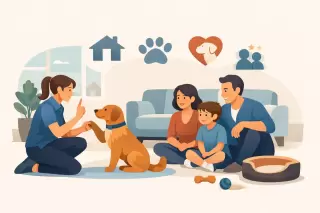
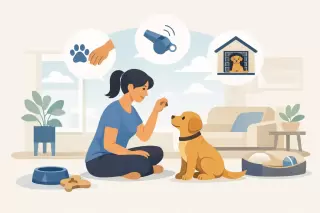
The moments that test a family dog rarely happen during a planned training session. They happen when the doorbell rings, a child drops a snack, the leash comes out, or the dog spots a squirrel across the street. The best commands for family dogs are the ones that make those everyday moments safer, calmer, and easier for everyone in the home.
A useful command is more than a word your dog can perform for a treat. It is a clear communication tool that tells your dog what to do instead of jumping, pulling, stealing food, or ignoring you. For families, that clarity matters. Children, adults, and visitors should all be able to use the same cues with the same expectations.
What Makes a Command Useful for Family Life?
Not every trick needs to be part of a family dog’s daily routine. A command earns its place when it helps prevent a problem, improves safety, or gives your dog a calm job to do. The goal is not to control every movement your dog makes. It is to create predictable routines your dog understands.
Start with a small set of words and use them consistently. If one person says “down,” another says “off,” and a third says “get down,” your dog has to guess what each person means. Pick one cue, teach it clearly, and make sure everyone uses it the same way.
Reward-based practice is especially helpful in a busy household. When your dog makes the right choice, reward promptly with a small treat, praise, play, or access to something they want, such as going outside. The reward should fit the dog. A food-motivated puppy may work eagerly for treats, while an energetic adult dog may value a chance to chase a toy.
The Best Commands for Family Dogs
1. Name Recognition
Before asking for any other behavior, your dog should reliably respond to their name. Saying your dog’s name should mean, “Look at me.” It should not become background noise or a warning that something unpleasant is about to happen.
Practice at home when your dog is not already distracted. Say the name once in a warm, clear voice. When your dog looks toward you, mark the moment with praise such as “good” and give a reward. This simple skill makes every other command easier because you first have your dog’s attention.
Avoid repeating the name several times. If your dog does not respond, move closer or reduce the distraction rather than raising your voice.
2. Come
A dependable recall can prevent a frightening situation from becoming an emergency. “Come” matters when a gate is left open, a leash slips, or your dog starts moving toward another dog, person, or road.
Build this command gradually. Begin indoors from only a few feet away. Say “come” once, move backward a step or two to encourage your dog toward you, and reward generously when they arrive. Make coming to you worthwhile, especially at first.
Do not call your dog only for things they dislike, such as ending playtime, getting a bath, or having their nails trimmed. Sometimes call them, reward them, and let them return to what they were doing. That teaches your dog that coming when called does not always end the fun.
3. Sit
“Sit” is a practical default behavior, not just a basic obedience exercise. A dog who sits has a harder time jumping on guests, rushing through a doorway, or grabbing at hands holding food or a leash.
Use sit before things your dog wants: meals, leash clipping, greeting visitors, going outside, and receiving a tossed toy. This gives the command real meaning in daily life. It also helps dogs learn that calm behavior opens doors, literally and figuratively.
For young children, sit is often one of the safest commands to practice with adult supervision. Keep the sessions short and make sure children do not lean over, hug, or crowd the dog while asking for it.
4. Wait
“Wait” teaches self-control in situations where your dog needs to pause but does not necessarily need to stay in one exact position. It is useful at exterior doors, before crossing a street, before getting out of the car, and while you set down a food bowl.
Start with a very short pause. Ask for sit, say “wait,” then reward after one second while your dog remains still. Gradually add time, distance, and distractions. Release your dog with a consistent word such as “okay” or “free.” Without a release cue, many dogs are left unsure of when the exercise ends.
A wait at the front door does not replace proper management. Use gates, leashes, and secure doors whenever needed, particularly with puppies or dogs still learning reliable impulse control.
5. Leave It
Every family dog should learn that “leave it” means turn away from that item and focus back on the person. This can help with dropped food, a child’s toy, medication on the floor, wildlife during walks, and unknown objects outside.
Teach it first with a low-value treat hidden in your closed hand. When your dog stops sniffing or pawing at your hand, reward with a different treat from your other hand. Your dog learns that walking away from the item is what pays.
As the skill improves, practice with the item visible, then on the floor, then in more distracting places. Do not rush to difficult setups. If your dog keeps taking the item, the exercise is too hard for their current skill level.
6. Drop It
“Drop it” is different from leave it. Leave it means do not pick that up. Drop it means release what is already in your mouth. This cue is valuable for dogs that grab socks, children’s toys, tissues, sticks, or items found on walks.
Practice using an approved toy, not something dangerous or highly valuable. Offer a treat near your dog’s nose, say “drop it” as they release the toy, then reward. In many cases, give the toy back afterward. That helps prevent your dog from believing that releasing an item always means losing it.
Never chase a dog who has taken something. Chasing can turn a simple mistake into a game or cause a dog to swallow the item faster. If your dog regularly guards objects, stiffens, growls, or snaps when approached, get professional help rather than trying to take items by force.
7. Place
“Place” sends your dog to a bed, mat, or designated spot. For many households, this is one of the most helpful commands because it gives a dog a clear alternative to being underfoot.
Use place during dinner preparation, when guests arrive, while children are playing, or when groceries are coming through the door. Your dog does not need to stay there for an hour on day one. Begin by rewarding them for stepping onto the mat, then for sitting or lying down, and slowly build duration.
A place command works best when the spot is comfortable and consistently located. It should feel like a good place to settle, not a punishment zone.
8. Off
For a dog who jumps on people, “off” is more useful than repeatedly saying “no.” It tells the dog exactly what needs to happen: four paws return to the floor. Then reward the behavior you want, usually a sit or calm standing position.
Everyone needs to follow the same rule. If a dog is allowed to jump on one family member but is scolded for jumping on another, the behavior becomes confusing and harder to change. Ask visitors to ignore jumping when possible, then offer attention once the dog is calm.
This command is also helpful around furniture, counters, and beds, although household rules should be decided in advance. It is difficult to teach a dog that the couch is allowed only sometimes unless the conditions are very clear.
9. Let’s Go
A family walk is much more enjoyable when the dog understands that “let’s go” means move with the handler. This is often more practical than expecting a perfect formal heel for an entire walk.
Say “let’s go,” take a few steps in the direction you want, and reward your dog for moving with you on a loose leash. If the leash tightens, stop or calmly change direction rather than pulling back and continuing forward. Dogs quickly learn what gets them where they want to go.
Practice in easy locations before expecting success near busy sidewalks, dogs, or exciting smells. A reactive, fearful, or highly energetic dog may need a more individualized plan that addresses the reason for the pulling, not just the leash itself.
10. Settle
A settle cue teaches your dog that there are times for rest, even when family life is active. It can be practiced on a bed, in a crate if your dog is comfortable there, or beside you while you relax.
Reward calm choices: lying down, resting the head, soft body language, and quiet attention. This is not about demanding that a dog stay still when they are overexcited or worried. If your dog cannot settle, they may need more distance from the activity, a bathroom break, exercise appropriate for their age, or help learning to cope with the trigger.
How to Make Commands Stick With the Whole Family
Short practice sessions work better than one long session each week. Try two to five minutes before meals, before walks, or during calm parts of the day. Build commands into routines so your dog sees them as useful, not as random tests.
Keep the difficulty appropriate. A puppy who can sit in the kitchen may not be ready to come away from another dog at the park. An older rescue dog may need time to trust a new household before responding confidently. Progress comes from setting up successful repetitions, then increasing the challenge slowly.
If your dog listens well in one room but not another, that is normal. Dogs do not automatically generalize a command to every setting. Practice in different rooms, then the yard, then quiet public spaces when it is safe to do so.
For families dealing with jumping, pulling, recall problems, or constant distractions at home, personalized training can make a major difference. K9 Manners works with dogs in the environment where those habits actually occur, helping each household create clear routines that fit their dog and daily schedule.
The best time to practice is usually just before the problem begins: ask for a wait before opening the door, a place before visitors enter, or a sit before clipping the leash. Those small, repeatable moments give your dog a clear path to success and give your family more chances to enjoy them.