The front door opens for one second, and your dog is suddenly halfway down the driveway. That moment is exactly why so many owners search for how to stop door dashing dogs – not because it is annoying, but because it is dangerous. A dog that bolts through the door can end up in traffic, rush at a neighbor, or disappear before you can react.
The good news is that door dashing is very trainable. The less comfortable truth is that it usually does not improve on its own. If your dog has learned that an open door means freedom, excitement, guests, walks, or deliveries, the behavior has been paying off. Training works when you change what the door means and teach your dog a better job to do instead.
Why dogs dash through doors
Most dogs are not trying to be defiant. They are responding to excitement, habit, curiosity, or poor impulse control. Puppies often rush doors because everything outside feels new and rewarding. Adolescent dogs do it because they are fast, impulsive, and easily overstimulated. Adult dogs may do it because nobody has ever shown them that waiting is part of the routine.
Sometimes the problem is bigger around specific triggers. Guests arriving, kids going in and out, delivery drivers, squirrels in the yard, or the sound of a leash can push a dog over threshold. In those moments, your dog is not making thoughtful choices. That is why yelling “no” from behind them rarely helps. The behavior is happening too fast, and the reward is too strong.
This is also why one-size-fits-all training advice can fall flat. A shy small dog, a high-drive young shepherd, and a friendly lab with zero brakes may all door dash for different reasons. The plan should fit the dog and the household.
How to stop door dashing dogs with management first
Before you start formal training, make the behavior harder to practice. Every successful dash rehearses the problem. Management is not a shortcut or a failure. It is part of the training process.
Use baby gates, exercise pens, leashes, or tethers when needed, especially during busy times of day. If your dog rushes the front entrance when deliveries arrive, do not keep testing whether they will suddenly make a better choice. Set them up so they cannot bolt while they are still learning.
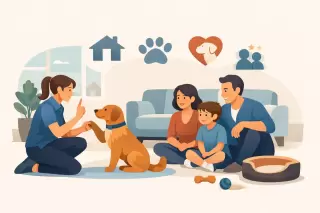
Management matters even more in homes with children or frequent visitors. If the door opens often and unpredictably, your dog has too many chances to get it right by accident or wrong by habit. For many families, the fastest progress comes from pairing training sessions with smarter household routines.
Teach a station away from the door
One of the best answers to how to stop door dashing dogs is to stop treating the doorway as the only training spot. Asking your dog to hover near the door and “be good” is hard. Giving them a clear place to go is easier.
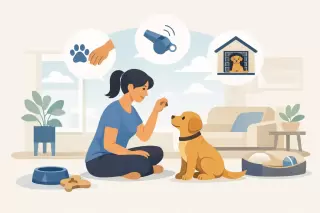
Choose a bed, mat, or designated spot several feet away from the entrance. Teach your dog to go there on cue and stay there briefly while calm things happen. At first, keep it simple. Send them to the mat, reward generously, release, and repeat. Then build duration. Then add tiny pieces of door activity, like touching the knob, taking one step toward the door, or opening it an inch.
The goal is not to trick your dog. The goal is to create a predictable routine that says, “When the door becomes exciting, your job is to go here.” That gives your dog structure instead of conflict.
What makes station training work
A station cue works best when it is practiced outside of real-life chaos. If you only use the mat when guests are arriving, your dog may associate it with frustration or overstimulation. Practice when nothing is happening. Make the spot rewarding enough that your dog wants to go there.
Also be realistic about duration. Many dogs can hold a station for ten seconds long before they can handle two minutes of conversation at the doorway. Build in small wins.
Teach door manners in small pieces
If your dog explodes forward the second the door cracks open, the training step is not “open the door and hope.” Break the skill down.
Start with your dog on leash. Approach the door calmly. If your dog surges ahead, stop and reset. Reward for staying with you or pausing. Touch the doorknob. Reward calm. Turn the knob. Reward calm. Open the door one inch. Reward calm. Close it again.
This may feel slow, but that is the point. You are teaching that patience makes the door open and pushing makes the opportunity disappear. Dogs learn patterns quickly when the consequences are consistent.
Once your dog can stay composed through these small steps, ask for a sit or a brief wait before opening the door wider. Step through first if that is your goal. Then return and reward. Over time, your dog learns that the open door is not a release cue by itself.
Use release words clearly
A lot of dogs dash because the household has no clear release cue. The dog sits, the door opens, and then everybody moves at once. From the dog’s perspective, the sit was the cue to launch.
Pick a word such as “okay” or “free” and use it consistently. Your dog should learn that staying put matters until they hear that word. Without a release cue, many dogs will guess, and they usually guess early.
Reward the behavior you actually want
If you want a dog who waits at thresholds, rewards need to show up for waiting, not only for coming back after a mistake. Owners often get stuck in a pattern where the dog rushes, gets called back, then gets attention, food, or repeated interaction. That can accidentally reinforce the whole sequence.
Try to catch the quiet moments. Reward your dog for hanging back from the doorway, choosing the mat, checking in with you, or remaining seated while the door opens. Calm behavior around entrances should become valuable.
Food rewards are useful here because timing matters, but they are not the only option. Access can be a reward too. A dog who wants to go outside can earn that privilege by waiting politely first. That is real-life training, and it tends to stick.
When guests make everything harder
Guest arrivals are often the toughest version of this problem. The energy changes, voices get louder, people move unpredictably, and your dog’s excitement spikes. If this is where your training falls apart, that does not mean it is failing. It means the setup is too difficult right now.
For many dogs, guest practice should start with one calm helper rather than a full family gathering. Put your dog on leash, send them to their station, and have the helper enter quietly. Reward often. Keep the session short. If your dog cannot stay below that excitement level, increase distance from the door or use a gate so they can still succeed.
There is also a trade-off here. Some owners want a dog who greets guests nicely at the door. Others simply want safety and control. Those are not always the same training plan. For a true door dasher, it is often smarter to prioritize staying back first and polite greetings second.
Common mistakes that slow progress
One of the biggest mistakes is moving too fast. If your dog can wait while you touch the doorknob but loses control when the door opens halfway, that is your current training line. Work there longer.
Another common issue is inconsistency between family members. If one person requires a wait, another laughs while the dog bursts through, and a third only corrects after the fact, your dog gets mixed information. Door routines work best when everyone handles the dog the same way.
Owners also underestimate how much arousal affects learning. A dog that can wait perfectly at 2 p.m. may forget everything at 6 p.m. when kids come home and dinner is starting. That does not mean your dog is stubborn. It means distractions and excitement change the difficulty.
When you need more than basic practice
If your dog door dashes with intense panic, has poor recall once outside, guards exits, or becomes reactive around visitors, basic threshold work may not be enough by itself. That is where personalized coaching can make a real difference, because the trainer can see the exact doorway, layout, family routine, and trigger pattern that keeps the behavior going.
In-home training is especially helpful with door issues because this behavior is tied to real life. The distance from the mat to the front door, the timing of kids leaving for school, the dog’s view through sidelights, and the way guests enter all matter. A plan that looks fine in a class setting may not transfer cleanly to your home.
K9 Manners works with owners on these kinds of everyday problems where they actually happen, which often leads to faster, more practical progress.
How to stop door dashing dogs and keep it stopped
Once your dog improves, keep practicing. Do not retire the routine the moment things look better. Reinforce door manners often enough that they stay part of daily life.
You do not need to reward every single wait forever, but you should continue to notice and support good choices. Refresh the station cue, practice with low-level distractions, and be careful during high-risk moments like parties, deliveries, or holiday traffic through the house.
A dog who no longer bolts through open doors is not just better behaved. That dog is safer, easier to live with, and more trustworthy in the moments that matter most. Start small, be consistent, and remember that calm at the door is not luck. It is a skill your dog can learn.