You call your puppy’s name, and for a split second they look at you – then they spot a sock, a child, a leaf, or absolutely nothing at all and sprint in the other direction. That moment is where many owners start wondering how to build puppy listening skills without turning every interaction into a battle. The good news is that listening is not a personality trait your puppy either has or does not have. It is a skill that develops through clear communication, repetition, and practice in the places where your dog actually lives.
For most puppies, “not listening” is not defiance. It is usually a mix of distraction, excitement, confusion, and age. Puppies are beginners. They do not automatically understand that a cue matters in the kitchen, at the front door, in the yard, and on a walk. If you want reliable listening, the goal is not simply to teach commands. The goal is to help your puppy understand what words mean, why paying attention to you is worthwhile, and how to respond even when life is interesting.
What listening really means for a puppy
When owners say they want a puppy who listens, they usually mean a few everyday things. They want the puppy to come when called, stop grabbing things, settle down faster, and respond the first time instead of the fifth. They also want a dog that can focus long enough to follow through.
That matters because listening is really a chain of small skills. Your puppy has to notice you, understand the cue, feel motivated to respond, and be able to do it in that environment. If one part of that chain breaks down, the result looks like stubbornness even when it is not.
This is why two puppies can know the same cue and perform very differently. One may sit perfectly in a quiet living room and completely forget the word outside. That does not mean training failed. It means the puppy has not yet learned how to generalize the behavior in harder situations.
How to build puppy listening skills at home
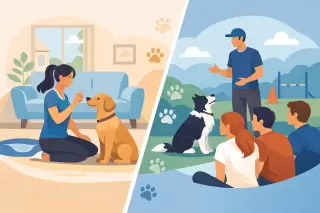
The best place to start is your home, because it gives your puppy the best chance to succeed. A quiet room is easier than a busy sidewalk. A short session before your puppy gets overtired is easier than asking for focus after a long, stimulating day.
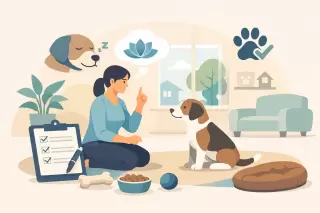
Begin by teaching your puppy that paying attention to you leads to good things. Say their name once in a calm, upbeat tone. The moment they look at you, reward that choice. This sounds simple, but it builds a powerful habit. Your puppy starts learning that hearing you is worth responding to.
Keep your cues clear and consistent. If “come” means come, avoid turning it into “come here, come on, come now, why are you not coming?” Puppies learn faster when the language stays steady. The more extra talking you add, the easier it is for the main cue to get lost.
Short sessions work better than long ones. A few minutes here and there often produce better results than one extended session that leaves both of you frustrated. Puppies learn in bursts. End while your puppy is still engaged, not after attention has completely fallen apart.
Focus first, commands second
A common mistake is teaching lots of cues before the puppy has learned how to focus. But focus is the foundation. If your puppy cannot tune in to you for a few seconds, every other lesson gets harder.
One of the easiest ways to build focus is to reward check-ins. If your puppy glances at you during a walk through the house or pauses to look at you in the yard, mark that moment with praise or a treat. You are showing your puppy that choosing you matters.
You can also practice simple pattern exercises. Ask for an easy behavior your puppy knows, reward it, pause, then ask again. This creates a rhythm your puppy can follow. That rhythm helps energetic puppies slow down enough to think.
There is a balance here. You do not want your puppy dependent on constant food forever, but early on, rewards are part of the communication. They help your puppy understand which choices are correct. Over time, rewards can become less predictable, but in the learning stage they should be clear and timely.
Timing matters more than people think
If your puppy jumps on a guest, steals a shoe, then hears “off” or “leave it” ten seconds later, they may not connect your words to the action at all. Good listening depends on good timing from the owner.
Reward the behavior you want the moment it happens. Interrupt unwanted behavior early, before it becomes a full event. If your puppy is starting to head for the coffee table, redirecting right away is easier than trying to stop them once the object is already in their mouth.
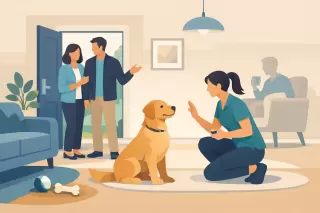
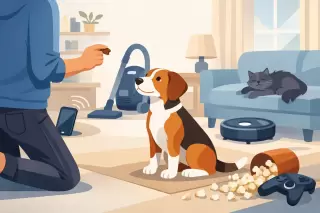
This is one reason in-home training can be so effective. Real listening problems usually happen in real moments – at the door, during meals, when guests arrive, or when the leash comes out. Practicing in the actual environment helps owners improve their timing where it counts.
Why puppies stop listening around distractions
Many owners feel discouraged when their puppy listens nicely inside but seems to forget everything outside. This is normal. Distractions change the level of difficulty.
A squirrel, a moving car, a child on a scooter, or the smell of another dog can be far more rewarding than whatever you are offering if the puppy is not ready for that challenge. It does not mean your puppy is choosing to ignore you out of spite. It means the environment is currently winning.
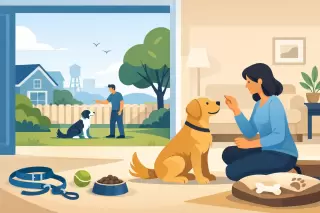
The answer is to raise difficulty gradually. Practice a cue in a quiet room, then another room, then near the front door, then in the yard, then on a calm street. If your puppy struggles, the solution is usually not to repeat the cue louder. It is to make the setup easier.
This is where many people accidentally create a bad habit. They say a cue multiple times while the puppy continues ignoring it. Over time, the puppy learns that the first few repetitions do not matter. Say the cue once, help your puppy succeed if needed, and adjust the environment so they can actually respond.
Everyday routines that improve listening
Listening skills do not only develop during formal training sessions. They grow during daily life. Meal times, leash routines, greetings, play, and rest all shape how your puppy responds to you.
Before putting the food bowl down, ask for a simple pause. Before going out the door, wait for a moment of calm. Before throwing a toy, ask for eye contact. These small moments teach your puppy that self-control and attention are part of normal life, not just something that happens during training.
Sleep and overstimulation also matter more than many owners expect. An overtired puppy often looks wild, mouthy, and “selectively deaf.” In reality, that puppy may be too tired to process much at all. If listening seems to disappear at certain times of day, look at the schedule. More rest, shorter sessions, and better structure can make a big difference.
How your tone affects puppy listening skills
Your voice can help or hurt communication. Puppies respond best to calm, clear direction. If every cue comes out frustrated, rushed, or repeated, your puppy may become confused or tune you out.
That does not mean you need to sound overly cheerful all the time. It means your tone should be steady and readable. A clear “come” or “sit” is easier to understand than a stream of emotional language. Dogs are excellent at reading energy, and many puppies become more scattered when the people around them are tense.
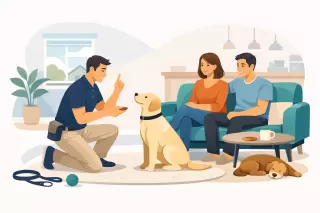
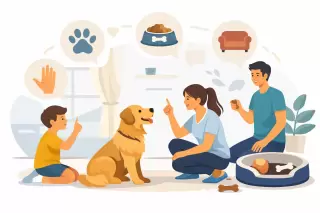
Consistency matters across the household too. If one person allows jumping, another corrects it, and a third laughs at it, the puppy receives mixed information. Better listening often starts with people using the same cues, the same expectations, and the same follow-through.
When progress feels slower than expected
Puppy training is rarely a straight line. Teething, growth stages, fear periods, and bursts of confidence can all affect how well a puppy listens from one week to the next. That is frustrating, but it is normal.
If progress stalls, step back and look at the pattern. Is the puppy being asked to work too long, in too much distraction, or without enough reward? Are the cues clear? Is everyone in the home responding the same way? Usually, listening problems improve when the training becomes more consistent and the expectations become more realistic.
Some puppies also need a more personalized approach. A bold, high-energy puppy may need more structure and impulse control work. A softer puppy may need gentler handling and more confidence-building. Good training is not one-size-fits-all, which is why many families do better with coaching that fits their specific dog and household.
If you are working through common issues like jumping on visitors, poor recall, leash pulling, or ignoring cues at home, personalized support can save a lot of time and confusion. For many families, that is where one-on-one help from a trainer such as K9 Manners becomes especially valuable, because the problem can be addressed where it is actually happening.
A puppy who listens well is not a puppy who never gets distracted. It is a puppy who is gradually learning that your words are clear, predictable, and worth responding to. Build that one small success at a time, and you will start to see something better than obedience alone – you will see trust, understanding, and a calmer daily life together.