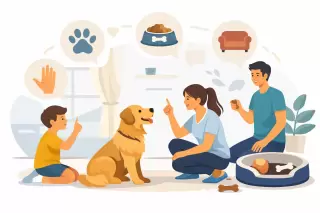
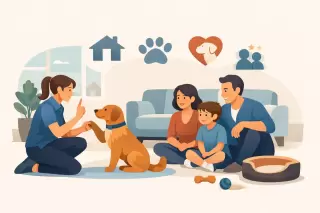
Your dog hits the end of the leash, your shoulder jerks forward, and what was supposed to be a simple walk turns into a tug-of-war down the street. If you are wondering how to stop leash pulling, the good news is that this is one of the most fixable behavior problems – but it usually improves faster when you change more than just the leash.
Pulling is not stubbornness. Most dogs pull because they have learned that pulling works. They pull toward a smell, a person, a squirrel, or the next patch of grass, and eventually they get there. From your dog’s point of view, the leash pressure was worth it. That is why real progress comes from teaching a different walking pattern, not from correcting harder and hoping the habit disappears.
Why leash pulling happens
Dogs naturally move faster than people. They are also more interested in the environment than in staying beside your left knee for an entire walk. Puppies pull because everything is new. Adolescent dogs pull because they are excited and impulsive. Adult dogs pull because they have practiced it for months or years.
There is also a common owner mistake hiding in the background. Many people only pay attention when the dog is already pulling. The leash gets tight, the owner reacts, the dog surges ahead again, and both sides get frustrated. Calm walking rarely gets rewarded, so the dog has very little reason to repeat it.
Equipment can affect the problem too. A standard collar may be fine for some dogs, but for strong pullers it often gives the owner less control and the dog more opportunity to lean into pressure. A front-clip harness can help in many cases because it redirects the dog’s momentum, but no tool teaches leash manners by itself. The tool supports the lesson. It is not the lesson.
How to stop leash pulling without making walks miserable
The goal is not a robotic heel for the entire walk. For most families, the better goal is a dog that can walk on a loose leash, check in with the owner, and move through real-life distractions without dragging anyone along.
Start in the easiest place possible. That may be your living room, driveway, or backyard. If your dog cannot walk beside you for ten calm steps at home, expecting success on a busy sidewalk is asking too much too soon.
Bring small, high-value treats and keep the leash short enough to prevent a big lunge, but not so tight that it is already under tension. Then begin walking slowly. The moment your dog is near you and the leash is loose, mark that choice with a calm yes or good and reward. At first, reward often. You are showing your dog exactly what pays.
When your dog forges ahead and creates tension, stop. Do not keep walking with a tight leash. That only teaches your dog to pull harder. Wait for even a small release of pressure, a glance back, or a step toward you, then reward and move again. Some owners prefer to turn and walk the other way instead. That can work well for dogs who charge forward repeatedly, as long as the timing is clear and the dog is not getting yanked around.
This is where patience matters. Early leash training can feel slow because you are interrupting an old habit and building a new one. A five-minute focused session is often more useful than a long walk full of pulling.
Reward the position you want
Many dogs need to learn that staying near you is valuable. Do not wait for perfect walking before rewarding. If your dog is within your preferred range and the leash is loose, that is worth reinforcing.
It also helps to reward by your side rather than reaching the treat out in front of your dog. If the reward always appears ahead, your dog may start speeding up to chase the next one. Keep the treat placement where you want the dog to be.
Teach attention before distractions win
A dog who never checks in with the owner on walks is much harder to guide. Practice simple attention at home first. Say your dog’s name once. When your dog looks at you, reward. Then build that habit in low-distraction spaces before expecting it outside near kids, bikes, or other dogs.
This matters because leash pulling is often an attention problem as much as a walking problem. If the environment is always more rewarding than you are, your dog will keep choosing the environment.
Common mistakes that keep pulling going
Owners often make progress for a few days and then accidentally undo it. The biggest issue is inconsistency. If your dog pulls for ten minutes and still gets to the park, the pulling was reinforced. It does not take perfect training every second, but your dog does need a clear pattern: loose leash gets access, pulling slows things down.
Another common issue is asking for too much too quickly. A dog may do well in the driveway and fall apart on a neighborhood walk. That does not mean the training failed. It usually means the distraction level jumped too fast. Move back a step, shorten the session, and rebuild from a place where your dog can think.
Some dogs are also being walked when they are already overexcited. If your dog explodes out the front door, spins at the leash, and launches into the walk at full speed, the problem started before you reached the sidewalk. In that case, work on calm exits first. Pause at the door. Reward stillness. Step out only when your dog can leave with some control.
The role of exercise and mental stimulation
A dog with endless energy will usually have a harder time walking politely, but more exercise is not always the full answer. Many owners try to solve pulling by walking farther while the dog practices dragging them for a longer distance. That creates a fitter puller.
What often helps more is a combination of physical activity, mental work, and structured training. Short training games, food puzzles, scent work, and brief obedience practice at home can take the edge off before the walk even starts. For young or high-drive dogs, that can make a noticeable difference.
It also depends on the dog. A small older dog who pulls to sniff every lawn may need a different plan than a powerful adolescent dog who lunges toward movement. The training principles stay similar, but the pace, rewards, and setup should match the dog in front of you.
When tools help and when they do not
There is no single best piece of walking equipment for every dog. A front-clip harness is often a good starting point for dogs who pull hard because it can reduce forward momentum without putting pressure on the neck. For some dogs, a regular harness can actually make pulling easier because it lets them lean into their chest and shoulders. For others, a flat collar may be enough once training is underway.
What matters most is safe fit, clear handling, and good timing. If a tool gives you more control but your dog is still rehearsing the same pulling pattern every day, the behavior will stay. Tools are useful, but training changes habits.
If you are unsure what equipment is appropriate, especially for a strong, reactive, or sensitive dog, individualized coaching can save time and frustration. That is one reason in-home training works well for leash issues. The dog can be evaluated in the actual environment where the pulling happens, from the front door to the sidewalk to the neighborhood route.
How long does it take to stop leash pulling?
That depends on the dog, the owner’s consistency, and how long the behavior has been practiced. Some dogs show improvement within a week of clear, consistent training. Others need longer because the pulling is tied to excitement, fear, reactivity, or a long history of getting rewarded for rushing ahead.
A realistic expectation is steady progress, not overnight perfection. Look for small wins first. A calmer start at the door, more check-ins during the walk, fewer moments of hard tension, and faster recovery after distractions all count. Those changes usually come before the polished walk owners are hoping for.
When to get professional help
If your dog is large, difficult to control, or pulling in combination with barking, lunging, or anxiety, getting help early is smart. The same is true if different family members are handling the dog in different ways and no one is seeing progress.
A trainer can spot details that are easy to miss when you are living the problem every day. Sometimes the issue is timing. Sometimes it is the route, the equipment, the reward value, or the fact that the dog is already overstimulated before the walk begins. A personalized plan usually works faster than generic advice because it fits your dog, your home, and your routine.
Leash walking gets better when your dog understands that staying connected to you is what moves the walk forward. That is the shift to aim for. Not a battle of strength, not constant correction, just clearer communication and better habits one walk at a time.