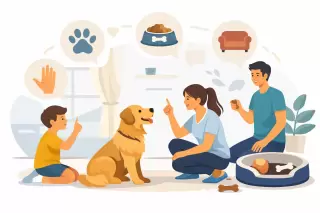
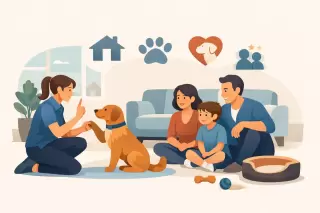
A dog who comes when called can enjoy more freedom. A dog who ignores you can turn a normal walk, backyard break, or park visit into a stressful chase. If you are wondering how to improve dog recall, the answer usually is not louder commands or more repetition. It is better timing, better rewards, and practice that makes sense to your dog.
Recall is one of the most valuable skills your dog can learn because it affects safety, trust, and everyday life. It matters when the front door opens, when a leash slips, when your dog spots another dog across the street, or when you simply need your dog to stop what they are doing and return to you. The good news is that recall can improve, even if your dog currently treats it as optional.
Why recall breaks down so often
Most dogs do not ignore recall because they are stubborn. They ignore it because something else feels more rewarding in that moment. A squirrel moves faster than you. A guest at the door is more exciting than your voice. The smell in the grass is more interesting than another casual “come.”
Owners also accidentally weaken recall without realizing it. If “come” sometimes leads to fun and other times leads to nail trims, the end of play, or being scolded, the cue starts to lose value. Dogs learn through outcomes. If coming to you does not consistently pay off, they will hesitate.
There is also a training gap that shows up in many homes. A dog may respond beautifully in the kitchen and then forget everything in the yard. That is not defiance. It is a sign that the behavior was learned in one setting but never properly practiced in harder ones.
How to improve dog recall starts with your cue
Choose one recall word and keep it clean. “Come” is fine. So is “here.” What matters is consistency. If one family member says “come,” another says “come here,” and someone else says the dog’s name ten times, the message gets muddy.
Your recall cue should predict something good. That means you do not use it when you are angry, and you do not keep repeating it as your dog runs the other way. Say it once, help your dog succeed, and reward the response.
If your cue has been overused or ignored for a long time, it may be worth starting fresh with a new word. This is especially helpful for dogs who have learned that “come” is background noise.
Reward matters more than most owners think
Not all rewards are equal. Dry kibble may work in a quiet hallway, but it usually will not compete with rabbits, visitors, or a fascinating smell on a walk. For recall, use something your dog truly cares about. Small pieces of chicken, cheese, soft treats, or a favorite toy often work better.
Think of recall as an emergency-level skill. It deserves premium pay. If your dog comes quickly, reward generously. If your dog comes away from something difficult, reward even more. You are not bribing your dog. You are building a strong history of success.
Praise helps, but praise alone is often not enough in the learning stage. Many owners are warm and encouraging, which is great, but if the environment is highly distracting, your dog needs a reason to choose you.
Start where your dog can win
The fastest way to stall recall training is to begin in a place that is too hard. If your dog ignores you in the yard, they are not ready for an open field. If they fail around guests, practice first without guests.
Start indoors with very short distances. Call your dog once in a cheerful voice, take a step back, and reward the moment they reach you. Then release them again. This release matters because it teaches your dog that coming to you does not always end the fun.
Once your dog is consistent indoors, move to a slightly harder space such as another room, then the backyard, then a quiet outdoor area on a long line. Increase difficulty in small steps. Good recall is built in layers.
Use a long line, not luck
A long training line is one of the most useful tools for recall work. It gives your dog room to move while still allowing you to prevent the habit of ignoring the cue. This matters because every time your dog hears “come” and does not respond, that pattern gets stronger.
With a long line, call your dog once. If they turn and come, reward well. If they hesitate, you can guide them in gently and still reward when they arrive. The goal is not to drag the dog back. The goal is to make sure the cue leads to the right action.
This is safer than practicing off leash before the behavior is reliable. It also gives owners confidence, which helps them stay calm and consistent.
Make recall part of daily life
One reason recall falls apart is that owners only use it when they urgently need it. Your dog starts to notice that being called means the fun is over. A better approach is to practice recall in normal, low-pressure moments throughout the day.
Call your dog from one room to another and reward. Call them away from mild distractions and then let them go back. Call them before meals, before a walk, or before tossing a toy. These short repetitions help your dog learn that responding to you is worthwhile and does not always mean restriction.
This is especially important in busy households. If children, visitors, food, and door activity are common triggers, recall should be practiced around those everyday patterns in a controlled way. Training works best when it fits real life.
Common mistakes that slow progress
Many recall problems are less about the dog and more about how the skill is being practiced. Repeating the cue is one of the biggest issues. If you say “come, come, come” and the dog responds on the fourth try, the dog learns they do not need to move on the first one.
Another mistake is calling your dog for things they dislike every single time. If recall always leads to the crate, bath, leash, or end of backyard time, your dog will start weighing their options. You can avoid this by sometimes calling your dog, rewarding them, and sending them back to what they were doing.
Punishing a dog once they finally come is another common setback. Owners are often frustrated, and that is understandable. But if your dog returns and gets grabbed angrily or scolded, they learn that coming close to you feels bad. Even if the recall was slow, reward the return. Then think about how to set up a better practice next time.
How to improve dog recall with distractions
Distractions should be added gradually, not all at once. Start with something mild, like a toy on the floor or a family member standing nearby. Then work up to harder situations such as the yard, the front of the house, or another dog at a distance.
Distance matters here. If your dog cannot respond around another dog from ten feet away, try fifty. If they cannot recall off a smell in the grass, shorten the distance and increase the value of your reward. Difficulty can be adjusted by changing space, duration, and distraction level.
This is where many owners benefit from one-on-one coaching. A trainer can help you see exactly what is making the exercise too hard and how to adjust it before frustration sets in. For households dealing with inconsistent listening at home, practical in-home training often gives clearer results because the distractions are real, not staged.
Puppies, adolescents, and rescue dogs
Recall training looks a little different depending on the dog. Puppies are usually eager but easily distracted, so sessions should stay short and upbeat. Adolescent dogs often seem like they forgot everything they knew. That stage is common, and it calls for patience, structure, and management.
Rescue dogs may need more time to build trust and understand the household routine. Some come with very little training history. Others have learned to tune people out because cues have been inconsistent. Progress is still possible, but the pace may need to be slower.
The key in all cases is not comparing your dog to someone else’s. A high-energy young dog in a busy neighborhood may need a different plan than an older dog in a quiet home. Good training is not one-size-fits-all.
When recall needs more than practice
Sometimes recall struggles are part of a bigger pattern. If your dog also pulls hard on leash, ignores boundaries, rushes the door, or becomes overstimulated quickly, recall may be suffering because overall communication is weak. In those cases, working on recall alone helps, but it may not solve the whole issue.
Dogs do better when the rules are clear across daily life. That includes impulse control, calm handling, and follow-through from everyone in the home. Recall improves faster when your dog already has a habit of listening and responding in other situations.
If that sounds familiar, personalized help can make the process much smoother. K9 Manners focuses on real-life obedience in the home, where owners usually see these challenges happen most often.
Reliable recall is not built in a weekend. It is built in small, clear moments where your dog learns that hearing you and returning to you is always worth it. Stay consistent, keep the reward high, and make success easy enough to repeat.