The moment you spot another dog across the street, your shoulders tighten. You shorten the leash, your dog notices, and the barking or lunging begins before you can cross the road. A reactive dog management guide should make those moments feel more predictable, not ask you to simply hope your dog will “get used to it.” The immediate goal is safety and calmer daily routines. Training can then build from there.
Reactivity is not a character flaw, and it does not mean your dog is bad or beyond help. It is an over-the-top response to something your dog finds difficult, such as another dog, a person, a bicycle, a delivery truck, or even visitors at the front door. Fear, frustration, excitement, lack of social skills, pain, and a long history of practicing the behavior can all play a role. The right plan depends on what your dog reacts to and how close they can be before they lose control.
Start With Management, Not Pressure
Management means arranging your dog’s environment so they are less likely to rehearse barking, lunging, spinning, or pulling. It is not “giving in.” Every time a dog reacts and the trigger goes away, even by chance, the reaction can become more established. Preventing those explosions gives your dog space to learn a different response.
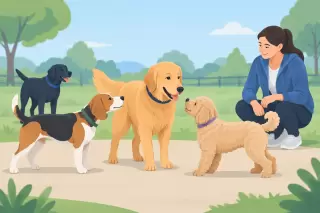
For walks, choose quieter routes and times when possible. Cross the street early, turn into a driveway, or make a calm U-turn when a trigger appears. There is no prize for walking directly past another dog if your dog is already staring hard, stiffening, or refusing treats. More distance is often the most useful training tool you have.
At home, management may look different. Close blinds that allow your dog to patrol the front window, use a gate while guests enter, or provide a quiet room with a chew when service workers arrive. These choices are not permanent failures. They are practical ways to keep your dog under threshold while you work on skills.
Learn Your Dog’s Early Warning Signs
A reactive episode rarely starts with the first bark. Most dogs show smaller signs first: they may freeze, close their mouth, stare, lean forward, raise their head, speed up, or stop taking food. Learning to spot those signals lets you act before your dog is overwhelmed.
Think of your dog’s comfort level as a bubble. Inside that bubble, they can notice a trigger and still respond to you. Outside it, their thinking brain is crowded out by emotion. Commands repeated after your dog has gone over threshold often sound like background noise, even if they know the cue well in the kitchen.
This is why “make your dog sit and watch the other dog” is not always the best choice. A sit can be useful when your dog is genuinely calm, but it can also keep them too close to something they find stressful. Movement and distance are often kinder and more effective.
A Reactive Dog Management Guide for Walks
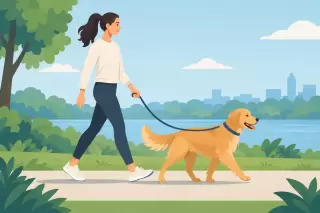
Before leaving the house, set yourself up for control without discomfort. A well-fitted harness and a regular-length leash usually offer better handling than retractable leashes, which can make it harder to create distance quickly. Check that your dog cannot slip out of their gear, especially if they are frightened by other dogs or traffic.
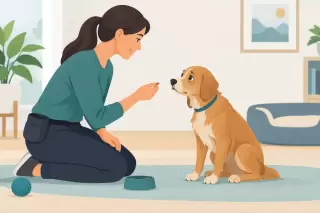
Bring small, high-value treats your dog can eat easily. The treats are not a bribe for bad behavior. They help create a positive association with seeing a trigger at a safe distance, and they give your dog a simple job: notice, then turn back to you.
When you see a trigger, use this sequence:
- Notice it before your dog does whenever possible.
- Create distance calmly by crossing the street, turning away, or stepping behind a visual barrier such as a parked car.
- As your dog sees the trigger and remains able to eat, mark the moment with a cheerful word such as “yes” and offer a treat.
- Keep moving if standing still causes your dog to stare or build tension.
- Leave sooner if your dog becomes rigid, stops eating, vocalizes, or pulls toward the trigger.
The distance that works on Monday may not work on Saturday. A tired dog, a narrow sidewalk, several dogs in a row, or a surprise encounter can make the same situation much harder. Adjusting your plan is good handling, not inconsistency.
Replace the Habit With Useful Skills
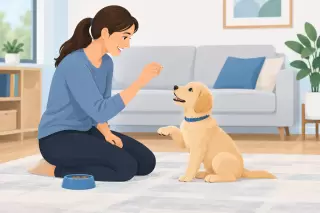
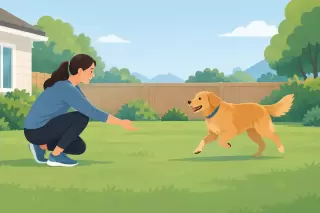
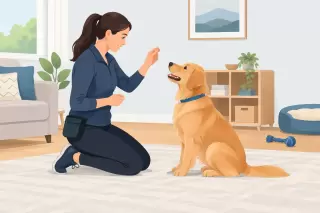
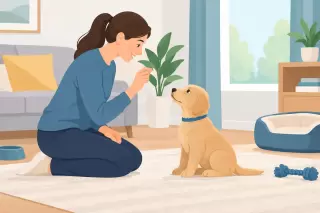
Management prevents setbacks, but your dog also needs skills that are easy to use in real life. Start teaching them away from triggers, in short sessions at home or in a quiet outdoor area. A name response, hand target, “let’s go” turn, and finding treats scattered on the ground can all help redirect your dog before they escalate.
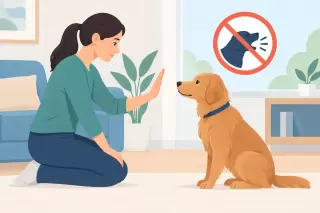
A hand target is particularly practical. Teach your dog to touch their nose to your open palm, then use it to guide them away from a distraction without pulling them by the leash. A practiced U-turn cue gives you an exit when someone suddenly rounds the corner with their dog.
Reward calm choices generously. If your dog looks at a distant dog and then looks back at you, that is a meaningful success. If they choose to sniff the grass instead of staring, reward that too. Calm behavior can be quiet and easy to miss, especially after you have spent months focused on explosive moments.
Avoid corrections that add fear, pain, or intimidation to an already emotional situation. Leash pops, yelling, and punitive equipment may interrupt behavior in the moment, but they can also make the sight of another dog predict discomfort. Some dogs then react faster or more intensely. Clear guidance, safe distance, and consistent reinforcement create a stronger foundation.
Keep Walks Realistic
A long, crowded walk is not always the best exercise plan for a reactive dog. If every outing involves repeated explosions, your dog may return home more stressed rather than pleasantly tired. Shorter walks in quieter places, combined with enrichment at home, can be a better choice while you work on behavior.
Food puzzles, scent games, supervised chew time, simple obedience practice, and games of find-it can meet part of your dog’s mental needs without exposing them to a difficult environment. This does not mean your dog should never see the outside world. It means you choose exposure thoughtfully instead of treating every walk as a test.
Be mindful of trigger stacking. Your dog may handle one passing cyclist well, then react strongly to the next dog because earlier stress has accumulated. After a challenging encounter, give them time to decompress. A quiet sniff in a low-traffic area or an early return home may be the right call.
Handle Visitors and Home Triggers Safely
Reactivity does not only happen on leash. Dogs may bark, rush the door, jump, or growl when visitors arrive because the entry routine is fast, loud, and unpredictable. Do not wait until guests are standing in the hallway to decide what to do.
Before opening the door, place your dog behind a gate, in a separate room, or on a leash at a comfortable distance. Give them something appropriate to do, such as searching for scattered treats or settling with a chew. Ask visitors to ignore your dog initially rather than reaching over their head or demanding a greeting.
Not every dog needs to greet every person. A successful visit may simply mean your dog remains relaxed behind a gate while people come in. That is a worthwhile outcome, especially for dogs that become fearful or overly excited around guests.
When Professional Help Matters
Some reactivity improves quickly once owners gain better timing and a reliable management plan. Other cases need more individualized support. Seek professional help if your dog has bitten, attempted to bite, redirects onto the leash or a person, cannot recover after seeing a trigger, or is becoming harder to handle. A veterinary check is also sensible when behavior changes suddenly, since pain and medical conditions can affect tolerance and irritability.
In-home coaching can be especially helpful because the trainer can see your actual doorway routine, walking setup, neighborhood challenges, and household dynamics. K9 Manners works one-on-one with families so the plan can fit the dog in front of you rather than a generic class exercise.
Progress is rarely a straight line. Some days your dog will surprise you with a calm glance and an easy turn-away; other days, a close encounter will be too much. Keep the goal small and useful: help your dog feel safer, help yourself feel prepared, and build one successful choice at a time.