A walk can feel perfectly normal until another dog appears across the street and your dog suddenly barks, lunges, spins, or refuses to move. That moment is stressful, especially when you are trying to keep everyone safe. The best ways to reduce reactivity start with understanding that your dog is not giving you a hard time. They are having a hard time managing a big emotional response.
Reactivity can show up around dogs, people, bicycles, cars, visitors, sounds, or handling. It is not a diagnosis and it does not mean your dog is aggressive. Some reactive dogs are fearful, some are frustrated because they want to get closer, and some become overwhelmed by fast-moving or unpredictable situations. The right plan depends on what your dog is reacting to, how intensely they respond, and where the behavior happens.
Start Below Your Dog’s Threshold
A dog can only learn when they are able to think. Once your dog is barking, lunging, staring hard, or ignoring food they normally love, they are likely over threshold. At that point, asking for repeated commands usually will not fix the situation. Your first job is to create distance.
Distance may mean crossing the street, turning down a driveway, stepping behind a parked car, or calmly heading the other way. It is not “giving in.” It is smart management that prevents your dog from rehearsing a reaction and gives you room to teach a different response.
Watch for the smaller signs that happen before the explosion: a closed mouth, stiff body, hard stare, raised ears, weight shifting forward, or slower movement. When you spot those early signals, increase space before your dog feels trapped or overwhelmed. A dog who can notice a trigger and still take a treat, look at you, or move with you is in a better learning zone.
The Best Ways to Reduce Reactivity Build New Associations
The goal is not to convince your dog that every person or dog must be approached. The goal is to help them feel safer and make better choices when a trigger appears.
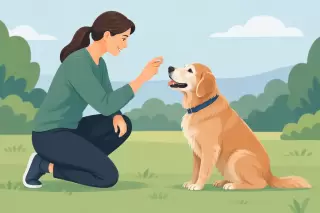
Begin at a distance where your dog can see the trigger without reacting. The moment they notice it, calmly mark the behavior with a cheerful word such as “yes,” then offer a high-value treat. Chicken, cheese, or another special reward often works better than regular kibble in a challenging setting. When the trigger disappears, the treats stop. Over time, your dog begins to learn that seeing a dog, person, or bicycle predicts something positive rather than something alarming.
This is most effective when you work slowly. If your dog reacts, the exercise was too difficult, too close, too long, or happening in an environment with too much going on. Simply create more distance and make the next repetition easier. Progress is rarely a straight line. A dog may handle a calm dog across a wide street but struggle with a barking dog passing closely on a narrow sidewalk. That is useful information, not failure.
Teach Simple Skills Away From Triggers First
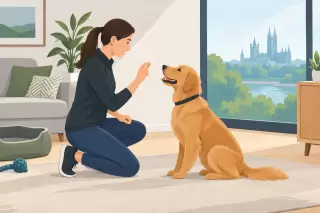
Reactive moments are not the place to introduce a brand-new cue. Practice useful skills at home, in the yard, or on quiet walks before expecting them around distractions.
A name response, hand target, loose-leash walking, U-turn, and “find it” cue can all give you practical options. For example, if you say your dog’s name and they turn toward you, reward them. If you present your hand and they touch it with their nose, reward that too. These simple exercises build the habit of checking in with you.
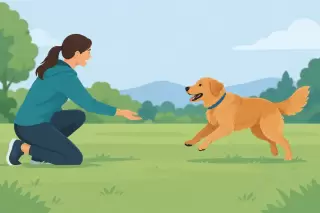
A happy U-turn is especially valuable. Practice saying a cue such as “this way,” turn smoothly, and reward your dog for moving with you. Then, when a surprise trigger appears around a corner, you have a familiar exit plan instead of needing to pull your dog away in a rush.
“Find it” is another useful reset. Toss a few treats on the ground and encourage your dog to sniff them out. Sniffing can help lower arousal, and it redirects attention without demanding eye contact. Use it only when there is enough distance for your dog to eat and search comfortably.
Management Is Part of Training, Not a Shortcut
Every intense reaction your dog practices can strengthen the pattern. While you work on behavior change, make daily life easier wherever possible. Choose quieter walking times, use wider routes, avoid busy store entrances, and give yourself permission to skip situations your dog is not ready for.
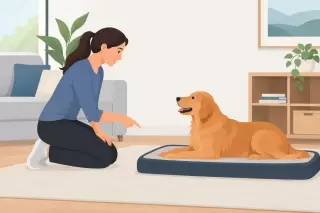
At home, management may include using a baby gate when visitors arrive, closing blinds if window barking is a problem, or giving your dog a quiet space with a chew before a delivery or family gathering. These choices do not replace training. They reduce pressure so training can work.
Equipment matters as well. A well-fitted harness and regular leash usually give you more control without putting pressure on your dog’s neck. Avoid retractable leashes around triggers because they make distance harder to manage. If your dog has a history of biting, snapping, or making contact, muzzle conditioning with a properly fitted basket muzzle can add an important layer of safety. A muzzle should be introduced gradually and paired with positive experiences, never used as punishment.
Avoid Corrections That Add Fear or Frustration
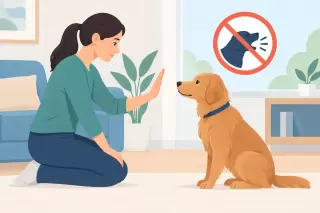
When a dog is loud and pulling, it is understandable to want the behavior to stop immediately. But leash jerks, yelling, prong collars, and other painful corrections can make the sight of another dog or person feel even worse. Your dog may become quieter in the moment while still feeling more worried, frustrated, or likely to react later.
Instead, focus on changing the picture your dog sees. Trigger appears, you create space, your dog looks back to you, and good things happen. This approach takes consistency, but it builds trust and gives your dog a workable alternative.
That does not mean permissive training. Clear boundaries still matter. You can calmly guide your dog away, prevent access to windows or front doors, and keep enough distance from others. The difference is that you are teaching and managing rather than trying to intimidate your dog out of an emotional reaction.
Keep Training Sessions Short and Honest
Five successful minutes can do more than a long walk filled with repeated barking. Start with a few calm exposures and end while your dog is still able to listen. Keep notes on what happened: the trigger, distance, your dog’s body language, and what helped. Patterns become much clearer when you look beyond one difficult walk.
Be realistic about your dog’s needs that day. Lack of sleep, visitors, a noisy neighborhood, pain, illness, and several stressful events close together can lower their tolerance. If your dog seems unusually reactive or their behavior changes suddenly, speak with your veterinarian. Physical discomfort can affect behavior, and a professional assessment is worth getting early.
Get Personalized Help When Daily Life Feels Small
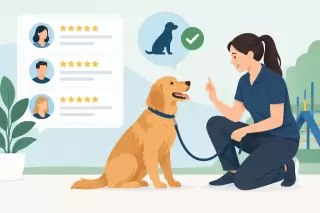
Some dogs need more than general advice, particularly when reactions are intense, unpredictable, or happening inside the home. An experienced trainer can observe the details that are difficult to see when you are holding the leash: the distance at which your dog begins to worry, the signals you may be missing, and how household routines may be contributing.
In-home support can be especially helpful for door reactions, window barking, visitor greetings, resource guarding concerns, and leash issues that begin right outside your front door. K9 Manners works with owners in their real routines, because the best training plan has to be practical enough to use on an ordinary Tuesday afternoon, not only during a lesson.
If your dog has bitten, caused injury, or is showing escalating aggression, seek qualified behavior support promptly and prioritize safety. Keep your dog away from situations they cannot handle while you put a plan in place.
Your dog does not need to greet every dog, welcome every visitor, or walk through every busy setting to have a good life. Calm can begin with one extra step of distance, one successful turn away, and one moment when your dog learns that you will help them through the hard stuff.