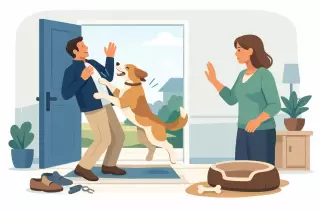
The doorbell rings, your dog races to the entryway, and suddenly everyone is managing barking, jumping, or a dog weaving between feet. If you want to train a dog for visitors, the goal is not to make your dog ignore people completely. It is to teach a predictable routine that helps your dog feel secure and lets guests enter your home safely and comfortably.
For many dogs, visitors are exciting, confusing, or both. A puppy may see every new person as a chance to play. An energetic adult dog may have learned that jumping gets attention. A cautious or reactive dog may bark because strangers arriving in their space feels overwhelming. The best plan depends on why your dog reacts, but calm behavior starts with the same foundation: practice before the real visitor arrives.
Start With the Behavior You Want at the Door
It is hard for a dog to understand “don’t jump” or “stop barking” without being shown what to do instead. Choose one simple arrival behavior that works for your household. For some dogs, that is sitting several feet from the door. For others, especially excitable or nervous dogs, it is going to a bed, mat, or gated room while people come inside.
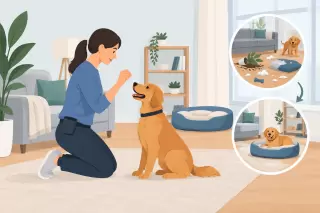
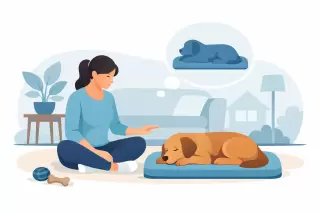
A stationing routine is often the most practical choice. Place a comfortable bed or mat away from the path between the front door and the living area. Teach your dog that going to that spot earns good things: treats, a chew, praise, or a favorite toy. Begin when the house is quiet. Say your cue, such as “place” or “bed,” guide your dog to the mat if needed, and reward them there.
At first, reward frequently for staying on the mat for just a few seconds. Build duration gradually. A dog who can remain settled while you walk across the room is developing a skill that can later help when a guest enters.
Practice the Visitor Routine Without Visitors
Dogs do not automatically connect a calm sit in the kitchen with a calm response to the doorbell. They need practice with the actual triggers that set them off. Rehearse in small pieces so your dog can succeed.
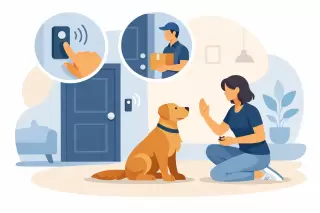
Start by touching the doorknob, then send your dog to their mat and reward. Next, open and close the door. Add a light knock, a doorbell sound, or the sound of someone speaking outside. If your dog stays calm enough to take treats and respond to you, continue. If they bark intensely, rush the door, or cannot settle, make the exercise easier.
This step matters because repeated rehearsals change the pattern. Instead of hearing the door and launching into chaos, your dog learns: the door sound means go to my spot, stay there, and earn a reward. Short sessions of three to five minutes are usually more effective than practicing until everyone becomes frustrated.
Use a Helper When Your Dog Is Ready
Once your dog can handle the sounds of an arrival, ask a friend or family member to help. Choose someone who will follow your instructions and who does not mind being ignored at first. Have your helper knock or ring the bell, then wait outside while you cue your dog to their spot.
Reward your dog for going to the mat and staying there as the door opens. Your helper should come in quietly, avoid reaching toward your dog, and avoid enthusiastic greetings. Excitement from guests often makes training harder, even when it comes from a well-meaning dog lover.
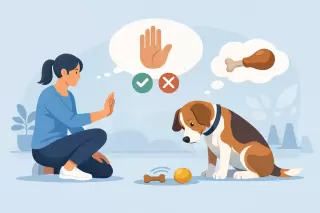
If your dog is calm, let them approach only when you give permission. Keep the greeting brief. If all four paws remain on the floor, your helper can offer quiet praise or toss a treat away from their body. Tossing the treat helps prevent your dog from crowding feet or jumping up for attention.
Manage Jumping Before It Becomes a Habit
Jumping is usually rewarded somewhere along the way. A person may laugh, speak to the dog, push them down, or offer a quick pat. From the dog’s perspective, all of that can be attention. The answer is not harsh correction. It is making calm behavior the reliable way to receive social attention.
Before visitors arrive, use a leash, baby gate, or closed door if your dog cannot yet hold their greeting skills. Management is not a shortcut or a failure. It prevents your dog from practicing the behavior you are trying to change.
Ask guests to wait until your dog is calm before petting them. If your dog jumps, the guest should quietly turn away or step out of reach. The moment your dog has four paws on the floor, mark that success with praise and a treat. Consistency is more valuable than a perfect response every time. When one person allows jumping and another does not, dogs receive mixed information.
Give Barking and Anxiety the Right Response
Some barking at an unexpected knock is normal. The question is whether your dog can settle after alerting you. A single bark followed by a trip to their mat is very different from prolonged barking, pacing, lunging, or growling.
Avoid yelling over your dog. They may interpret your raised voice as joining the commotion, which can increase their arousal. Instead, create distance from the door, use the cue you have practiced, and reward calmer choices. Closing blinds, using a white-noise machine, or placing your dog behind a gate can also reduce the intensity of visual and sound triggers.
For a fearful dog, do not force an introduction. Your dog does not need to greet every visitor to be well behaved. A quiet rest in another room with a stuffed food toy may be the kindest and safest option. Guests should never corner, stare at, reach over, or insist on touching a nervous dog.
Growling deserves attention, not punishment. A growl is communication that your dog feels uncomfortable. Punishing it can remove the warning without resolving the fear behind it. If your dog growls, snaps, lunges, or has bitten a person, prioritize safety and seek individualized professional guidance before arranging more visitor practice.
Prepare the House Before Guests Arrive
Training works better when your dog’s needs have been met. Before a planned visit, give your dog an appropriate outlet through a walk, sniffing time, play, or a short training session. This does not mean exhausting your dog into compliance. It means reducing unused energy and helping them arrive at the moment in a calmer state.
Set up your tools before the doorbell rings. Have small treats ready, put the leash on if you need one, and prepare the mat or quiet room. Tell visitors what you need from them before they arrive: please ignore the dog initially, do not open the door themselves, and wait for your cue before greeting.
For larger gatherings, be realistic. A dog who is progressing nicely with one calm visitor may not be ready for six adults, children moving around, coats being dropped, and food within reach. Use gates and quiet breaks. It is better for your dog to spend part of a party relaxing away from the action than to become overwhelmed and rehearse unwanted behavior for two hours.
Make the Routine Part of Everyday Life
The strongest visitor manners are built into daily routines, not saved for holidays and special events. Practice sending your dog to their mat while you bring in groceries, answer the door for a delivery, or greet a family member. Reward calm waiting before meals, before walks, and before play. These small moments teach your dog that self-control pays off.
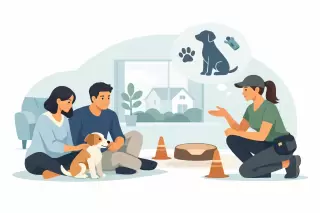
Every household needs a plan that fits its dog. A social young dog may progress quickly with structured greetings. A senior dog, rescue dog, or dog with a history of fear may need slower steps and more management. In-home training can be especially helpful because the trainer can see the doorway, layout, family routines, and triggers that affect your dog’s behavior in real life.
K9 Manners works with Durham Region families in their homes to build practical routines for issues such as jumping on guests, barking at the door, and difficulty settling around company. Personalized coaching helps ensure every person in the home knows what to do before, during, and after a visitor arrives.
Your dog does not have to become the life of every gathering. A dog who can settle safely while visitors come and go is already doing something valuable: trusting you to handle the situation and understanding exactly what is expected of them.