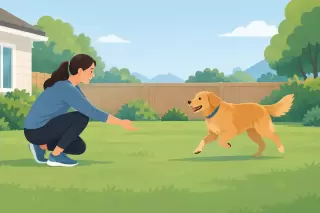
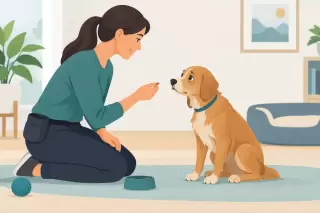
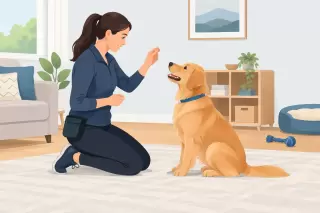
That sharp bark while you make dinner, answer an email, or sit down with your coffee can wear on even the most patient dog owner. Learning how to stop demand barking starts with one key shift: your dog is not necessarily being difficult. They have learned that barking makes something happen – attention, play, food, access to the yard, or movement toward a favorite spot.
The good news is that demand barking can change. The process is not about intimidating your dog into silence. It is about making your expectations clear, meeting legitimate needs before they become urgent, and teaching your dog that calm behavior works better than barking.
What Demand Barking Looks Like at Home
Demand barking is communication with a purpose. A dog may bark at you while you are on the couch because they want a toy thrown. They may bark at the kitchen counter because dinner is late, at the door because they want outside, or beside their leash because they want a walk.
The pattern is usually easy to spot: the bark happens, the owner responds, and the dog gets something they wanted. Even a frustrated response can be rewarding if the dog wanted your attention. Looking at them, speaking to them, getting up, or saying “What?” may be enough to keep the behavior going.
This does not mean you should ignore every bark. Dogs also bark because they need to eliminate, hear something unfamiliar, are uncomfortable, or are worried. Before treating barking as a training issue, consider the context. A sudden increase in vocalizing, especially in an older dog or a dog who seems restless or distressed, is worth discussing with your veterinarian.
How to Stop Demand Barking by Changing the Payoff
Demand barking continues because it has a history of success. If barking at 6:00 p.m. has reliably made dinner appear, your dog has every reason to try it again tomorrow. The goal is to stop paying the bark while giving your dog a clear, appropriate way to ask for what they need.
Start by deciding what the bark is requesting. If your dog wants a ball thrown, the answer might be to wait for a moment of quiet, then ask for a sit before you throw it. If they bark to go outside, wait for quiet, then calmly take them out. The thing they wanted still happens, but quiet behavior becomes the route to it.
Timing matters. You do not need five minutes of silence at first. One or two seconds is enough for a dog who has practiced barking for a long time. The instant they pause, calmly mark that choice with “good quiet,” then offer the appropriate reward or activity. Gradually ask for longer quiet pauses as your dog understands the new pattern.
Avoid repeating cues over the barking. Calling “quiet, quiet, quiet” while your dog continues can turn the cue into background noise. Instead, wait for the natural break, say your chosen cue once if you use one, and reward the silence. The cue should predict success, not become part of an argument.
Expect the Barking to Get Worse Briefly
Many owners give up at the hardest point: the barking gets louder or lasts longer after they stop responding. This is often called an extinction burst. Your dog is trying the behavior with more effort because the usual result did not happen.
If you respond during that louder round, your dog may learn that persistence is what finally works. That can make the habit stronger. Stay calm, keep everyone safe, and be consistent. When a pause comes, reinforce the quiet response.
Consistency does not mean leaving a dog to bark in distress. If your dog is panicked, needs to go outside, is reacting to something frightening, or is escalating into frantic behavior, address the underlying problem. Training should build confidence and communication, not ask a dog to cope beyond their ability.
Prevent the Situations That Set Barking Off
Training is easier when your dog is not already frustrated and over-aroused. A dog who has had no exercise, no mental activity, and no predictable routine is more likely to demand your attention at the worst possible time.
Build short outlets into the day that fit your dog. This may include a sniff walk, a food puzzle, a brief training session, a chew, or a game of tug with clear start and finish cues. High-energy dogs often need more than a quick trip into the backyard, while some puppies simply need a nap before they become noisy and demanding.
Predictability can help as well. You do not need to run your home on a rigid schedule, but regular meal, potty, exercise, and rest opportunities reduce uncertainty. If your dog typically barks for dinner, avoid waiting until they are already worked up. Prepare the meal a little earlier, or give them a calm activity in another area while you cook.
Management is not cheating. If the doorbell, the sight of a leash, or food preparation consistently triggers barking, use distance and simple setup changes while you train. A baby gate, a mat in another room, or a stuffed food toy can prevent your dog from rehearsing the behavior every day.
Teach Better Ways to Ask
A dog cannot be expected to stop a behavior without learning what to do instead. Choose simple replacement behaviors that work in your actual household.
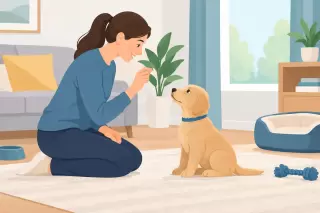
For many families, a sit is a useful default. Before opening the door, putting down a bowl, clipping on a leash, or throwing a toy, wait for a sit and a brief moment of quiet. A dog who learns “sit politely and good things happen” has less reason to bark demands.
A place or mat cue can be especially helpful during busy times, such as cooking dinner or welcoming guests. Begin when the house is quiet. Reward your dog for going to their mat, settling there, and remaining calm for short periods. Then gradually practice while you move around the kitchen or prepare a snack. Give the mat a positive history before expecting it to work during the most challenging moments.
You can also teach a gentle communication routine. Some dogs can learn to sit at the back door, touch a hanging bell, or come to you and make eye contact when they need something. The method matters less than consistency. Your dog needs to see that polite behavior gets a reliable response.
Common Mistakes That Keep Demand Barking Going
The biggest mistake is inconsistency. If one person ignores barking but another tosses the ball to make it stop, the dog receives mixed information. Agree as a household on the response to common requests, including meals, outdoor breaks, play, and attention.
Scolding can also backfire. A raised voice may add excitement, sound like you are barking back, or give attention to a dog who wants engagement. Harsh corrections can create anxiety around normal household activities, particularly in sensitive or reactive dogs.
Another common issue is asking for too much too soon. If your dog has barked for a walk every day for months, expecting ten quiet minutes on the first day is unrealistic. Reinforce the smallest improvement, then build from there. Clear progress often comes from many short, successful repetitions rather than one long standoff.
Finally, do not confuse demand barking with boredom alone. More exercise may help, but it will not teach manners if barking still produces the desired result. Your dog needs both appropriate outlets and a consistent lesson about how to ask.
When Personalized Help Makes a Difference
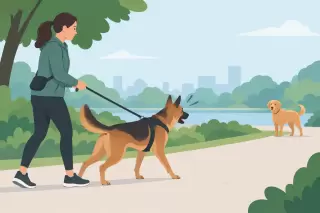
Some barking habits are tied to bigger challenges, such as leash frustration, separation concerns, reactivity, resource guarding, or difficulty settling in a busy household. In those cases, generic advice may not be enough because the trigger and payoff are different in every home.
An in-home trainer can watch the exact moments when barking happens, help you identify the pattern, and coach every family member through a plan that is realistic for your routine. K9 Manners works with owners throughout Durham Region in the environments where these everyday challenges actually occur.
A quieter home is not created by demanding silence from your dog. It comes from showing them, patiently and consistently, that calm choices are heard, understood, and rewarded.