A walk can become stressful fast when your dog pulls toward every squirrel, driveway, person, and smell. The good news is that pulling is not a sign that your dog is stubborn or trying to be in charge. It is usually a habit that works: pulling gets the dog closer to something interesting. This loose leash walking guide will help you replace that habit with a clearer, calmer way to move through the world together.
Loose leash walking does not mean your dog must march in a perfect heel for an entire neighborhood walk. It means the leash has slack most of the time, your dog can enjoy appropriate sniffing, and you can guide them safely without being dragged down the sidewalk. That is a practical goal for busy families and real-life walks.
Start with the right expectations
Dogs naturally walk faster than people, especially when they are excited, young, energetic, or headed somewhere familiar. A puppy may pull because everything is new. An adult dog may pull because they have practiced it for months or years. A reactive dog may hit the end of the leash because they are worried, overstimulated, or eager to create distance from another dog.
Those situations need slightly different support, but the central lesson stays the same: a tight leash does not move the walk forward. A loose leash does.
Progress is rarely a straight line. Your dog may walk beautifully on a quiet street and struggle near a school, busy intersection, or favorite park. That does not mean the training has failed. It means the distraction level is currently higher than your dog can handle. Make the exercise easier, create more space, and build back up gradually.
Choose equipment that gives you control without discomfort
A standard 4- to 6-foot leash is usually the most useful choice for training. Retractable leashes make it difficult for a dog to understand where the boundary is and can encourage pulling by allowing the dog to reach the end of the line repeatedly.
Your dog should also wear secure, properly fitted equipment. Many owners find that a well-fitted front-clip harness provides better steering and reduces the leverage a dog has when pulling. A flat collar can work for some dogs, but avoid relying on corrections, leash jerks, or equipment designed to cause discomfort. Those methods may suppress behavior in the moment while adding frustration or anxiety, particularly for sensitive or reactive dogs.
Bring small, high-value treats for early practice. Soft pieces of chicken, cheese, or a favorite training treat can be more motivating than kibble when you are working around distractions. Praise, sniffing, moving forward, and greeting permission can also become rewards. The best reward depends on what your dog wants at that moment.
Teach the loose leash rule before a long walk
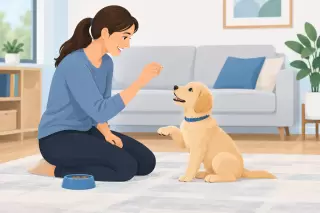
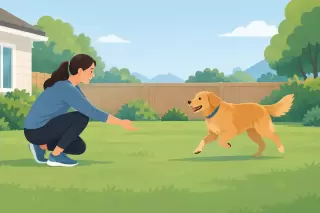
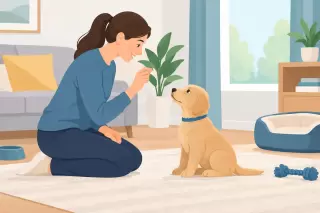
Trying to train during a full, rushed walk is hard for both of you. Begin somewhere quiet, such as your living room, driveway, backyard, or the calmest part of your street. Your first sessions may only last five minutes, and that is enough.
Reward the position you want
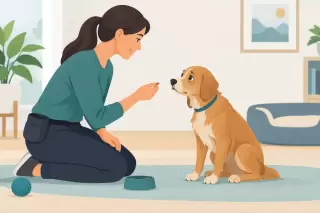
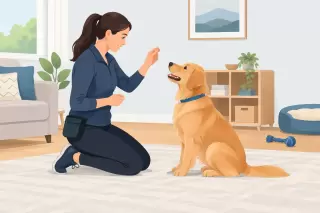
Stand with your dog beside you and let the leash hang in a soft U shape. The moment your dog looks at you, stays near your side, or takes a step without tightening the leash, mark it with a cheerful word such as “yes” and give a treat close to your leg.
Where you deliver the treat matters. If treats always appear out in front, your dog may forge ahead to look for them. Feeding beside your leg helps your dog understand that staying near you is worthwhile.
Take one or two steps. If the leash remains loose, mark and reward again. Then take a few more steps. Keep the pace easy and the rewards frequent at first. You are not bribing your dog. You are clearly paying for a new behavior while it is still unfamiliar.
Stop when the leash gets tight
When your dog reaches the end of the leash, stop moving. Do not pull back, lecture, or keep walking while trying to overpower them. Simply become uninteresting for a moment.
Wait for even a small change: your dog looks back, shifts their weight toward you, or takes one step that puts slack in the leash. Mark that choice and move forward again. Your dog learns that pulling makes the interesting thing pause, while a loose leash makes progress happen.
For some dogs, turning and walking a few steps in the opposite direction works better than standing still. This is especially useful if stopping makes your dog pull harder. The trade-off is that frequent turns can feel slow at first, so use them in short practice sessions rather than when you need to get somewhere quickly.
Use movement as a reward
Food is helpful, but it is not the only reward on a walk. If your dog wants to sniff a tree, calmly wait for slack, then say “go sniff” and walk with them to the spot. If they want to greet a familiar person, ask for a loose leash before allowing the greeting.
This teaches a powerful real-world lesson: polite walking earns access to the things your dog already loves. It also keeps walks enjoyable. A dog who never gets to sniff or explore may become more frustrated, not less.
Build focus without making walks boring
A loose leash does not require constant eye contact. Your dog can check in with you, investigate their surroundings, and still walk politely. Think of it as shared attention rather than strict obedience.
Practice simple check-ins during quiet parts of the walk. Say your dog’s name once. When they look toward you, praise and reward. You can also change direction occasionally, rewarding your dog for noticing and following. These small moments make it easier to regain their attention before they reach the end of the leash.
Give your dog planned sniff breaks. You might spend a few minutes practicing near your side, then release them to sniff on a loose leash. Alternating between structure and exploration is often more realistic than expecting one walking style for the entire outing.
Handle distractions before they become a pulling match
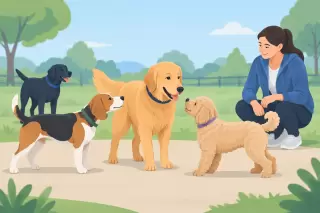
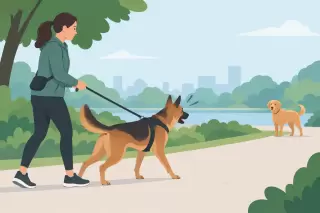
If you see a trigger ahead, act early. Cross the street, step into a driveway, make a gentle U-turn, or increase the distance before your dog is staring, lunging, or barking. Distance is not avoidance or failure. It is a training tool that gives your dog a chance to stay under control.
At a comfortable distance, reward your dog for noticing the distraction and turning back to you. Keep your voice calm and your leash loose whenever possible. Tightening the leash the moment another dog appears can accidentally signal that something tense is about to happen.
If your dog cannot take food, cannot respond to their name, or is already pulling hard, the situation is too difficult for learning. Move farther away and try again later. Dogs need repeated success at manageable levels before they can cope with busier environments.
Common mistakes that slow progress
The most common issue is inconsistency. If pulling sometimes gets your dog to the park, to a smell, or to another dog, they will keep trying it. Everyone who walks the dog should follow the same basic rule: slack moves forward.
Another mistake is asking for too much too soon. A ten-minute successful practice near home is more valuable than a 45-minute battle through a crowded area. Gradually add distance, busier streets, and more challenging distractions as your dog improves.
Finally, avoid making every walk a training test. Dogs need exercise, enrichment, and time to be dogs. On days when you are short on time, choose a quieter route, use a longer line in a safe permitted space, or focus on a decompression sniff walk rather than perfect leash skills.
When personalized help makes a difference
Some leash pulling is straightforward and improves quickly with consistent practice. Other cases involve fear, overexcitement, reactivity, a powerful adolescent dog, or a household where different family members handle the dog differently. In those cases, hands-on coaching can help you identify what is driving the behavior and adjust the plan to your dog.
In-home training can be especially useful because many leash problems begin before the walk even starts. A dog may become frantic when the leash appears, rush through the door, or practice excitement in the hallway. Working through those routines where they happen gives owners a clearer plan for the whole experience, not just the sidewalk.
A calmer walk is built one loose step at a time. Celebrate the small choices your dog makes, keep your expectations fair, and remember that communication gets stronger each time you show your dog exactly what works.