A walk can become frustrating before you reach the end of the driveway. Your dog pulls toward a squirrel, twists at the end of the leash, or coughs after hitting the collar. The harness versus collar walking decision is not just about what looks nicest or what your dog wore as a puppy. The right choice affects comfort, control, safety, and the training habits you build together.
For many families, the answer is not simply harness good, collar bad. A properly fitted collar has a place in daily life, and a well-chosen harness can make walks easier for many dogs. What matters most is your dog’s body, behavior, and the way you use the equipment.
Harness Versus Collar Walking: Start With Your Dog
A flat collar is appropriate for most dogs to wear for identification, as long as it fits correctly and is not left on in situations where it could snag. It is simple, familiar, and easy to clip on for a quick bathroom break. For a dog that walks beside you on a loose leash without lunging or pulling, a collar may also be perfectly suitable for walks.
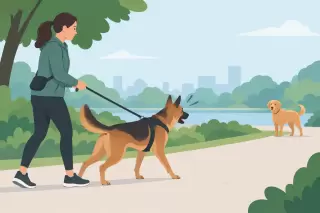
The concern begins when a dog regularly hits the end of the leash. Pressure from a collar is concentrated around the neck and throat. A strong puller, excitable puppy, or dog that lunges at other dogs can repeatedly put force on that area. Some dogs cough, gag, or become more agitated when that happens. Others may not show obvious signs, but the walk still becomes a cycle of pulling and correction rather than clear communication.
A harness distributes leash pressure across the chest and body. This is often a more comfortable option for dogs that pull, have short noses, are small or delicate, or have neck and airway concerns. It can also give an owner more physical control when a dog is large, fast, or easily distracted.
That said, a harness does not teach loose-leash walking on its own. Some harnesses, especially styles with a leash attachment on the back, can make it easier for a determined dog to lean forward and pull. If your dog has learned that pulling gets them to every interesting smell, person, or patch of grass, changing equipment alone will not change that lesson.
When a Collar Can Work Well
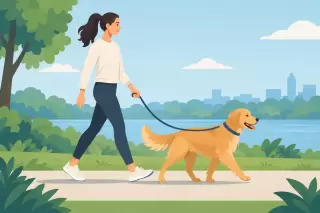
For a dog with reliable leash manners, a standard flat collar can be a comfortable, practical choice. The leash should remain loose most of the time. Your dog should be able to turn with you, pause when you stop, and move past everyday distractions without launching forward.
Collar walking may also be useful during short, calm outings when you are practicing attention and position in a quiet space. A dog that understands how to give in to light leash pressure rather than fight it can walk politely on either a collar or a harness.
Fit matters. You should be able to slide two fingers beneath a flat collar, but it should not slip over your dog’s head. Check it regularly, particularly for growing puppies or dogs whose weight changes. A collar that is too loose is an escape risk, while one that is too tight can cause rubbing and discomfort.
Avoid relying on a collar for a dog that chokes, coughs, pulls hard, or reacts suddenly on leash. Those behaviors are signs that the current setup and training plan need a closer look.
When a Harness Is the Better Choice
A harness is usually the more sensible starting point for dogs that create significant tension on the leash. This includes enthusiastic young dogs, dogs that lunge toward people or dogs, and dogs that become overstimulated outdoors. It is also often preferable for small breeds, flat-faced breeds, seniors, and dogs with a history of neck discomfort.
For training, a front-clip harness can be especially helpful. When your dog pulls forward, the leash connection at the chest gently redirects their body toward you instead of allowing them to drive straight ahead. That redirection can give you a brief moment to reward a check-in, change direction, or ask for a simple cue.
A front clip is a management tool, not a steering wheel. Pulling your dog around with the leash can still be uncomfortable and confusing. The goal is to use the harness to reduce strain while you teach the dog what earns forward movement: a loose leash, attention, and calm choices.
Back-clip harnesses can be comfortable and useful for some dogs, especially those that already walk well. They are often a good option for hiking or longer sniff-focused walks. But for a dog that pulls hard, a back attachment may give you less leverage and may not interrupt the pulling pattern.
A good harness should sit clear of the throat, allow full shoulder movement, and fit snugly without digging into the armpits. Watch your dog walk in it. If the straps twist, the chest piece rides high into the neck, or the harness shifts to one side, adjust it or try another design. Red marks, hair loss, reluctance to move, and chafing mean the fit is not right.
The Equipment Is Only Part of the Lesson
Dogs pull because pulling works. If pulling reaches the tree, greets the neighbor, or gets them closer to a scent trail, the behavior is rewarded by the environment. Repeatedly tugging back usually creates more tension without teaching the dog what to do instead.
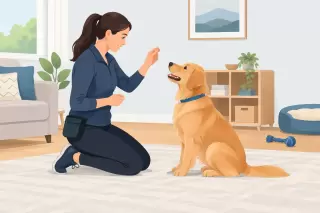
Start in a low-distraction area, such as your driveway, yard, or a quiet part of the sidewalk. Hold the leash with enough slack for your dog to move naturally, but not enough to rehearse dragging you forward. When your dog is beside you or checks in with you, calmly mark the choice with praise and reward it with a treat, a chance to sniff, or continued movement.
If the leash tightens, stop or calmly change direction. When your dog returns to a loose leash, move forward again. At first, progress may be slow. That is normal. You are replacing a habit that may have been practiced hundreds of times.
Keep early training walks short and realistic. A young or energetic dog may not be ready to maintain focus for a full neighborhood loop. It can help to separate a training walk from a decompression walk. During training, you are practicing attention and leash skills. During a decompression walk, you can allow more sniffing on a longer leash in a safe area, as long as your dog is not pulling you from place to place.
Avoid Equipment That Adds Pain or Fear
It is understandable to want a quick answer when walks feel exhausting. However, equipment designed to tighten, pinch, or deliver discomfort can create new problems, particularly for fearful or reactive dogs. If a dog sees another dog and then feels pain at the same moment, they may begin to associate that other dog with discomfort.
Tools that rely on aversive pressure can also suppress warning signs without resolving the reason behind the behavior. A dog may look quieter while still feeling anxious, frustrated, or over-aroused. Clear training, appropriate distance from triggers, and rewards for calm behavior build more reliable skills.
If your dog is suddenly pulling more than usual, coughing on walks, resisting the harness, or reacting strongly to everyday sights, consider whether pain, poor fit, fear, or overstimulation may be involved. A veterinarian can help rule out medical concerns, while personalized training can identify what is happening in the actual walking environment.
Choose the Setup You Can Use Consistently
The best walking setup is one that keeps your dog safe and helps you practice good habits every day. For a calm, trained dog, that may be a flat collar. For a puppy, a powerful puller, or a dog with airway or neck concerns, a properly fitted harness is often the kinder and more practical option. Many families use both: a collar for identification and a harness for walks.
If walks have become a daily struggle, you do not need to solve it by buying a drawer full of gear. Focus on fit, safety, and one clear training plan. With patient practice, your dog can learn that staying connected to you is what makes the walk move forward.