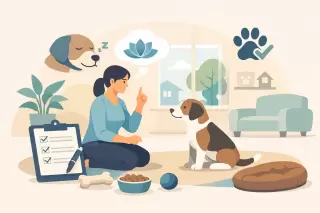
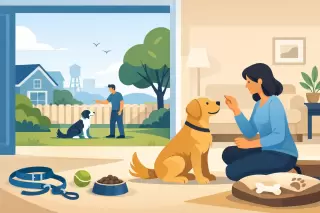
A puppy does not need to know a long list of tricks to be a pleasure to live with. What matters first is how they move through ordinary moments: when someone comes through the door, when a leash goes on, when food drops on the floor, or when you call them away from something interesting. The top puppy habits to teach early create a clear communication system before small frustrations become daily battles.
Puppies are learning all the time, including when no formal training session is happening. A habit that gets repeated and rewarded becomes the behavior they are likely to offer again. Start with short, simple practice built into meals, walks, play, and quiet time. Consistency matters more than long training sessions.
Top Puppy Habits to Teach Early for a Calmer Home
1. Responding to their name
Your puppy’s name should mean, “Pay attention to me,” not, “You are in trouble.” Say their name once in a warm tone. When they look toward you, mark that moment with praise and offer a small treat, toy, or gentle attention. Practice when there are few distractions before expecting success in the yard, on a walk, or around visitors.
Avoid repeating their name over and over when they are ignoring you. If they do not respond, move closer or make the situation easier, then reward the first glance back to you. A puppy that willingly checks in with you is easier to guide through nearly every other lesson.
2. A predictable bathroom routine
House training is less about correcting accidents and more about preventing them. Young puppies need frequent trips outside, especially after waking up, eating, drinking, playing, or spending time in a crate. Take them to the same general area, stay calm, and reward them right after they finish.
Supervision is part of the lesson. If your puppy is roaming freely while you are occupied, they have more chances to rehearse going indoors. Use a leash attached to you, a safe confinement area, or a crate when you cannot actively watch them. If an accident happens, clean it thoroughly and adjust the schedule. Scolding after the fact only teaches a puppy to hide when they need to go.
3. Calm greetings with four paws on the floor
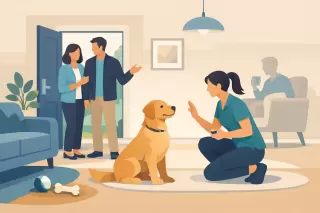
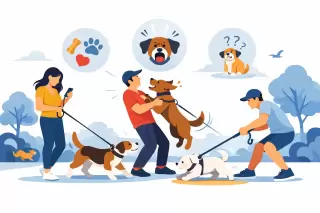
Jumping is often a puppy’s enthusiastic way of asking for attention. It becomes a bigger problem when people respond by laughing, petting, or pushing the puppy down. Even negative attention can feel rewarding to a social dog.
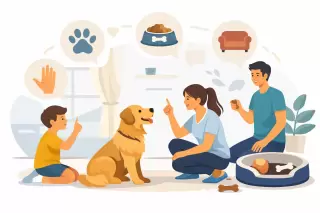
Teach your puppy that greetings begin when their paws are on the floor. Ask visitors to pause before reaching down. Reward the puppy for standing or sitting calmly, then let them receive the attention they want. If they jump, attention simply stops for a moment. This is especially helpful for families with children, seniors, or frequent guests, because a full-grown dog can be far less manageable than a small puppy.
4. Being comfortable with handling
Many dogs struggle at the veterinarian, groomer, or during basic home care because their paws, ears, mouth, or collar were rarely handled in a positive way. Begin with brief, gentle touches when your puppy is relaxed. Touch a paw, give a treat, and release it. Lift an ear, reward, and stop. Build gradually.
The goal is not to restrain your puppy until they give up. You want them to learn that handling predicts good things and that calm cooperation is worthwhile. If they pull away, growl, or become wiggly, take that as useful information. Make the exercise shorter and easier rather than forcing the issue.
5. Settling quietly nearby
A puppy needs activity, but they also need to learn that not every moment is playtime. Without practice, some puppies become overtired, demanding, and constantly underfoot. Teaching a settle can make dinner, work calls, family visits, and evenings at home much easier.
Choose a bed or mat in a low-traffic area. After a walk, play session, or bathroom break, guide your puppy there with a chew or a few treats. Reward quiet lying down. Start with only a minute or two, then gradually build duration. A settle is not a punishment or isolation. It is a valuable life skill that helps a dog switch off and rest.
6. Short, positive time alone
It is tempting to keep a new puppy close every minute, particularly in the first few weeks. But puppies also need to learn that being alone for a short time is safe. Start while they are relaxed and have had their needs met. Give them a safe chew in their crate, pen, or puppy-proofed space, step away briefly, and return before they become distressed.
Build time gradually. The right pace depends on the puppy. Some adjust quickly, while others need much smaller steps. If your puppy is panicking, barking frantically, or trying to escape, the exercise has become too difficult. This is not a behavior to “let them cry out” through. Calm, gradual practice protects confidence and can help prevent separation-related problems later.
7. Leaving items alone and giving them up willingly
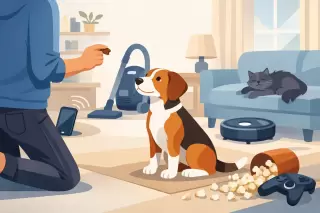
Puppies explore with their mouths. That is normal, but it can lead to stolen socks, children’s toys, dropped medication, or food from the counter. Teach both “leave it” and “drop it” early, using rewards that make cooperation worthwhile.
For “leave it,” begin with a treat in your closed hand. Let your puppy investigate, but wait quietly. The instant they move their nose away, say “yes” and reward from your other hand. They learn that ignoring one item earns something better. For “drop it,” trade a low-value toy for a treat, then often give the toy back. This prevents your puppy from seeing your approach as the end of fun.
Never chase a puppy who has something they should not have unless immediate safety requires it. Chasing can turn stealing into a game, while repeatedly taking items without a trade can encourage guarding. Management still matters: keep tempting items out of reach while the habit is developing.
8. Walking with a loose leash
Leash pulling works because it gets a dog where they want to go. If pulling leads to the grass, another dog, or an interesting smell, the puppy learns to pull harder next time. Begin in a quiet area with a properly fitted collar or harness and reward your puppy frequently for being near you while the leash is loose.
When the leash tightens, stop moving or calmly change direction. The reward for a loose leash is forward progress. Early walks should be short and realistic. Puppies need time to sniff and explore, so the goal is not a perfect heel for an entire walk. It is learning that they can enjoy the environment without dragging you toward it.
9. Coming when called
Recall is a safety skill, not a command to use only when it is time to leave the park. Start indoors. Call your puppy in a cheerful voice from a few feet away, reward generously when they arrive, and then let them go back to what they were doing. This teaches them that coming to you does not always end the fun.
Do not call your puppy to punish them, trim their nails, or take away every enjoyable activity. If you need to end something they love, call them, reward them, attach the leash, and occasionally offer another brief chance to sniff or play. In distracting environments, use a long line until their recall is reliable. Freedom should be earned gradually, not tested by luck.
Teach the Habit You Want to See
Early puppy training is not about expecting perfection. Teething, excitement, fear periods, and a growing attention span can all make behavior inconsistent. The most useful response is to ask what your puppy is practicing each day and whether the environment is helping them succeed.
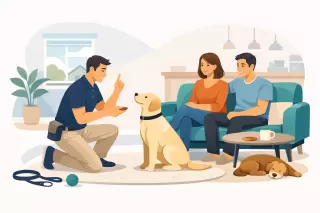
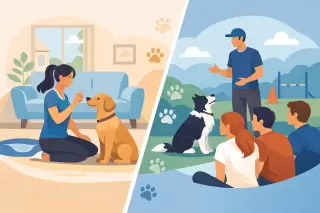
If jumping, pulling, nipping, or ignoring you is already becoming stressful, personalized coaching can make a major difference. An in-home trainer can see the actual doorway, kitchen, neighborhood walk, and family routine where the issue happens, then help everyone use the same clear approach.
Your puppy is learning what home feels like right now. Make it a place where calm choices are noticed, good behavior pays off, and guidance is clear enough for both of you to enjoy the process.