The knock at the door happens, and your dog goes from resting quietly to barking, jumping, spinning, or racing toward the entryway. It can feel embarrassing when company arrives, but it is also one of the most common home-training challenges. Learning how to train dogs around visitors starts with a simple goal: give your dog a clear job to do before, during, and after someone comes in.
A dog who loses control around guests is not necessarily being stubborn or unfriendly. Visitors bring excitement, unfamiliar scents, movement, voices, and attention. For some dogs, that creates over-arousal. For others, barking or rushing the door is driven by uncertainty. The right plan depends on why your dog reacts, but calm, consistent practice can make visits far more manageable.
Start Training Before a Visitor Arrives
The biggest mistake owners make is trying to teach manners in the middle of a busy arrival. When the doorbell rings and everyone is talking, your dog is already excited. New skills are much easier to build when the house is quiet.
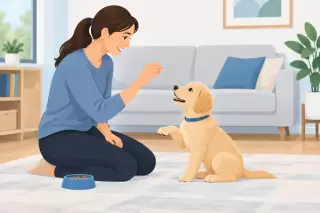
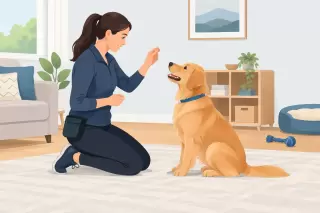
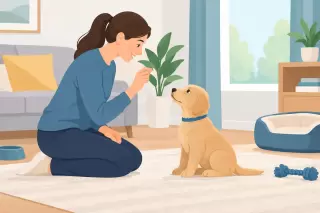
Begin by teaching a dependable place cue. This can be a dog bed, mat, crate, or a designated spot several feet from the door. Say a simple cue such as “place,” guide your dog to the spot, and reward them for standing, sitting, or lying there calmly. At first, reward quickly and often. The point is not to make your dog stay there for ten minutes on day one. You are teaching that going to their spot pays well.
Gradually add duration. Take one step away, then return and reward. Walk toward the door, come back, and reward. Touch the doorknob, then reward your dog for remaining on the mat. If they get up, calmly guide them back and make the next repetition easier. Repeating a cue your dog cannot yet follow only creates frustration for both of you.
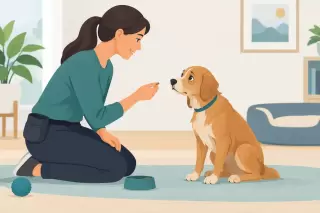
Practice a solid sit, down, and stay in everyday moments too. Ask for a sit before putting down the food bowl, opening the back door, or clipping on the leash. These small routines teach your dog that calm behavior is how they get access to the things they want.
How to Train Dogs Around Visitors Without Creating More Excitement
Once your dog understands their place cue, rehearse the visitor routine with a willing friend or family member. Choose someone who can follow directions and is comfortable working at your dog’s pace. Do not start with a crowded holiday gathering or a child who wants to rush in and hug the dog.
Have your helper knock or ring the bell while you send your dog to their place. Reward your dog for staying there, then have the visitor enter quietly. The visitor should initially ignore the dog completely. Eye contact, excited greetings, petting, and high-pitched talking can all reward jumping or barking, even when the person means well.
If your dog stays calm, offer treats on the mat. If your dog breaks position, jumps, or charges toward the guest, do not scold or turn the moment into a struggle. Calmly create distance, bring your dog back to their spot, and try again with less difficulty. Perhaps the visitor only opens the door halfway next time, or enters and stands farther away.
Your dog does not need to greet every person immediately. In fact, many dogs learn faster when greeting is earned after a few moments of calm behavior. Once your dog can remain settled, invite them over on leash for a brief greeting. Keep the leash loose. A tight leash can add tension and make an uncertain dog feel trapped.
If all four paws stay on the floor, the visitor may offer gentle attention. If your dog jumps, the greeting stops. This is not punishment. It is a clear lesson: calm behavior keeps social attention going, while jumping makes attention disappear.
Teach Visitors How to Help
Your dog’s progress will move much faster when guests understand their role. Let visitors know in advance that you are practicing a routine. Ask them to come in quietly, avoid reaching over your dog’s head, and wait for permission before petting.
For a dog that jumps, guests should turn slightly away rather than pushing the dog down or repeatedly saying “off.” Pushing can feel like play to an energetic dog, and the attention itself may reinforce the behavior. Rewarding four paws on the floor gives your dog a more useful answer.
For a shy or worried dog, visitors should not try to force a friendship. Give the dog space and allow them to observe from their bed, crate, or behind a gate. A guest can gently toss a treat away from themselves without staring at the dog. This lets the dog choose whether to approach and prevents the pressure that often makes fearful behavior worse.
Manage the Door Until the Training Is Reliable
Training works best when management prevents your dog from practicing the behavior you want to change. Every time a dog rushes the door, jumps on someone, and gets a big reaction, that habit becomes stronger.
Use a baby gate, exercise pen, leash, crate, or closed interior door while you build the new routine. These tools are not a failure or a shortcut. They keep everyone safe and give your dog the structure needed to succeed. This is especially helpful with puppies, large adolescent dogs, dogs that steal food from guests, or dogs who become overly excited around children.
If your dog reacts strongly to doorbells, change the sound’s meaning through short practice sessions. Ring the bell or play a recording at a low volume, then immediately send your dog to their place and reward. Start at a level where your dog can still think and respond. If they are barking nonstop, refusing treats, or unable to follow a familiar cue, the exercise is too difficult. Lower the volume, increase distance, or simplify the session.
It also helps to meet your dog’s needs before guests arrive. A walk with time to sniff, a short training session, or a food puzzle can take the edge off excess energy. This will not replace training, but it can make it easier for your dog to make good choices.
Know When Barking Is More Than Excitement
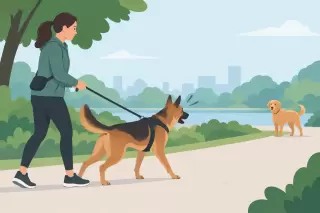
Not all visitor behavior should be handled the same way. A happy dog who jumps and wiggles needs impulse-control training. A dog who freezes, growls, lunges, snaps, or tries to block people from entering may be fearful, territorial, or overwhelmed.
Do not punish growling. A growl is valuable communication that tells you your dog is uncomfortable. Correcting the warning without addressing the fear can make a dog quieter, but not safer. Instead, separate the dog from visitors, prevent forced interactions, and get professional guidance tailored to the behavior and home environment.
Children deserve extra caution. Never ask a child to handle the leash, test a dog’s patience, or approach a dog that is resting behind a gate or in a crate. Even a friendly dog can become stressed when a room is noisy and unpredictable. Calm supervision and clear boundaries protect both dogs and people.
Build a Routine the Whole Household Can Follow
Visitor manners improve when every person in the home uses the same cues and expectations. Decide where your dog will go when someone arrives, who handles the leash or gate, and when greetings are allowed. A consistent routine is easier for your dog to understand than changing rules from one visitor to the next.
Keep practice sessions short. Five successful minutes with one helper can accomplish more than a long session that leaves your dog overstimulated. As your dog improves, add realistic challenges: a visitor carrying a bag, a second guest, someone entering after dark, or the sound of children talking outside the door.
Progress is rarely perfectly straight. Your dog may do beautifully with a quiet neighbor and struggle when a relative arrives with a booming voice or another dog is outside. That does not erase the work you have done. It simply shows you where your dog needs more support.
For many Durham Region families, the most effective help comes from practicing these routines in the exact doorway, living room, and family schedule where the problem occurs. K9 Manners focuses on practical in-home coaching because real-life behavior needs real-life solutions. With patient repetition, clear boundaries, and a plan that matches your dog’s temperament, visitors can become a normal part of home life rather than a source of stress.