A walk can go from peaceful to exhausting in the first ten steps. Your dog spots a squirrel, leans into the leash, and suddenly you are being pulled down the sidewalk while repeating “come on” with little effect. Many of the top leash training mistakes are not caused by a stubborn dog. They happen because dogs receive mixed messages during exciting, fast-moving moments outdoors.
Leash skills are learned through repetition, timing, and clear communication. The good news is that small changes in how you prepare for, respond to, and practice walks can make a meaningful difference. Here are the habits that often keep dogs pulling – and what to do instead.
Top Leash Training Mistakes That Create Pulling
Starting the walk while the dog is already overexcited
When the leash comes out, many dogs immediately begin spinning, barking, jumping, or racing to the door. If the door opens while that excitement is at its highest, the dog learns that frantic behavior starts the walk.
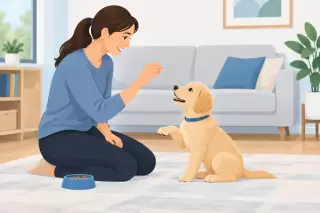
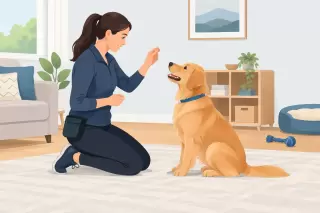
Pause before heading out. Ask for a simple behavior your dog already knows, such as standing calmly or sitting, then clip the leash on when they are reasonably settled. This does not mean expecting perfect stillness from an energetic puppy. It means avoiding the pattern where excitement is consistently rewarded with forward motion.
For some dogs, the first few minutes outside are the hardest part. A short pause in the driveway, a few easy cues, or a chance to sniff calmly can help them shift from indoor excitement to a more focused walk.
Letting pulling get the dog where they want to go
Dogs pull because pulling works. If a tight leash gets your dog to a favorite tree, another dog, a patch of grass, or the park entrance, the pulling has been rewarded. It does not matter that you feel frustrated or are saying “heel.” From your dog’s perspective, tension in the leash moved them closer to something valuable.
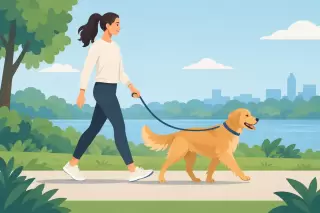
Instead, make forward movement the reward for a loose leash. When your dog pulls, stop or calmly change direction. When the leash loosens, continue toward the interesting thing. At first, this can feel slow and repetitive. That is normal. You are changing a habit your dog may have practiced on every walk.
Consistency matters more than making the correction dramatic. A gentle, predictable response teaches more clearly than repeated leash jerks or a frustrated voice.
Waiting until the walk to practice
A busy sidewalk is a difficult classroom. There are scents, traffic, people, dogs, birds, and new places to investigate. Asking a dog with no practice to walk politely through all of that is like asking a child to focus during the most exciting part of a field trip.
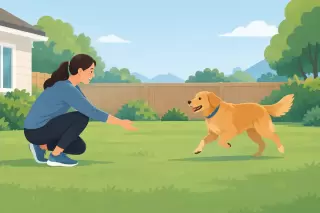
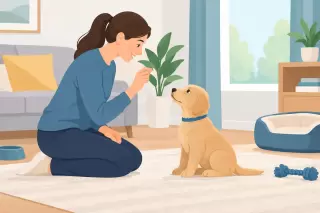
Begin in lower-distraction spaces such as your living room, yard, driveway, or a quiet stretch of sidewalk. Reward your dog for choosing to stay near you, checking in, and moving with a loose leash. Keep early sessions short enough that both of you can succeed.
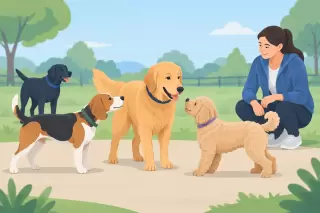
Then gradually add challenges. A dog who can walk politely for five minutes near home may not be ready for a crowded trail or a busy pet-friendly store. Training should grow with the dog’s ability, not jump ahead of it.
Repeating commands the dog does not understand
“Come on,” “let’s go,” “heel,” and your dog’s name can become background noise when they are repeated over and over. A cue only helps if your dog has first learned what it means in a calmer setting.
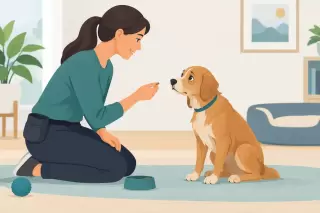
Choose simple words and teach them with a clear action. For example, say “let’s go,” begin moving, and reward your dog for coming with you on a loose leash. Use the same cue consistently rather than switching between several phrases. If your dog is too distracted to respond, create distance from the distraction or lower the difficulty instead of repeating the cue louder.
Your dog is not giving you a hard time when they cannot listen in a challenging moment. They may be having a hard time processing everything around them.
Using the leash only to restrain the dog
The leash should be a safety tool and a communication aid, not a constant source of pressure. When dogs feel steady tension all walk long, they often learn to lean against it. This is especially common with strong, enthusiastic dogs that have learned to pull with their chest and shoulders.
Aim for a leash that forms a relaxed curve whenever possible. Use your movement, body position, and rewards to guide your dog rather than relying on physical force. The right walking equipment can also help, but no collar, harness, or training tool replaces practice and consistent handling.
Equipment choices depend on the dog. A growing puppy, a small dog, a powerful adolescent, and a reactive adult may need different setups. If your dog coughs, chokes, twists out of equipment, or becomes more upset during walks, it is worth getting individualized guidance before continuing with the same approach.
Forgetting to reward the behavior you want
Owners often notice every pull but miss the quiet successes: the moment their dog looks back at them, slows down, walks beside them for several steps, or chooses not to react to something interesting. Those are the moments that build better leash habits.
Use rewards your dog genuinely values. For some dogs, a small treat is highly motivating. For others, praise, access to a sniffing spot, or being allowed to move forward is more meaningful. You do not need to hand out treats forever at every step. In the learning stage, though, frequent rewards help your dog understand exactly what earns good things.
A walk does not need to look like a formal heel to be successful. Most families simply want a dog who can walk without dragging them, stay reasonably connected, and respond when needed. Reward that practical version of success.
Expecting a straight-line, no-sniff walk
Dogs experience walks through their noses. Sniffing is not a failure of training. It can provide mental enrichment and help a dog decompress, especially after being indoors.
The balance is teaching your dog that sniffing happens on a loose leash, not as a reward for pulling. You might use a cue such as “go sniff” after your dog walks calmly for several steps. This gives your dog a clear difference between walking with you and taking a sniff break.
Some days call for more structure, such as walking near traffic or passing another dog. Other days, a slower neighborhood sniff walk may be exactly what your dog needs. Good leash manners should make real life easier, not turn every outing into a strict drill.
Being inconsistent between family members
One person stops when the dog pulls. Another keeps walking because they are in a hurry. One person allows greetings with every dog; another pulls the dog away. It is understandable, but inconsistent rules make training take longer.
Talk as a household about the few behaviors that matter most. Decide what you will do when the leash gets tight, whether your dog may greet people or dogs on walks, and what cues everyone will use. Keep the plan realistic. A simple plan followed by everyone is more effective than an elaborate routine no one can maintain.
Children should also have support when walking the dog. Even a friendly dog can pull suddenly toward a squirrel, person, or sound. Adults should handle situations that exceed the child’s strength or the dog’s current training level.
When Leash Pulling Is More Than a Training Gap
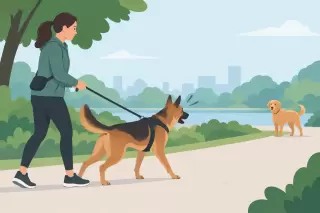
Not every leash problem is simple excitement. A dog who barks, lunges, freezes, spins, or cannot take food around other dogs may be fearful, reactive, or overwhelmed. In those cases, getting closer to the trigger to “get used to it” can make the response worse.
Create distance and look for the point where your dog can notice the trigger without losing control. That distance may be across the street, behind a parked car, or at the edge of a park. Behavior work is most effective when the dog is calm enough to learn.
This is where one-on-one support can be especially helpful. An in-home trainer can see how your dog behaves around your own door, driveway, neighborhood route, and family routine, then build a plan that fits your real life rather than a generic class exercise.
Better walks are rarely created by one perfect correction. They come from many small, calm repetitions that show your dog what works. Start with one change on your next walk, notice the moments your dog gets it right, and give both of you time to build a new habit together.