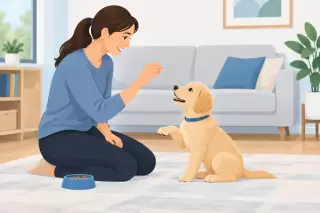
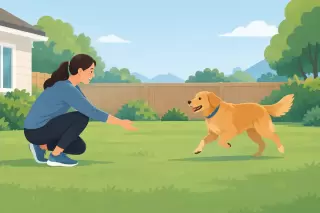
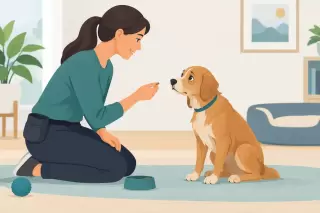
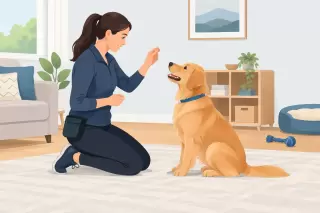
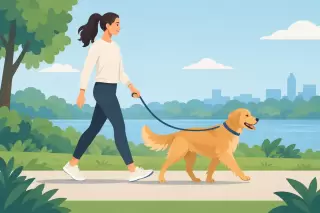
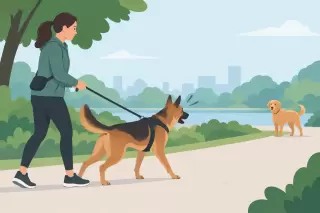
A dog can sit beautifully in a busy class and still jump on your guests, steal food from the counter, or pull you down the sidewalk the moment you get home. That is why the choice between in-home dog training vs. classes is not simply about where lessons happen. It is about where your dog needs help, how they respond to distractions, and how much individual coaching you need to make training stick.
Group classes can be a positive experience for some dogs and owners. For many families, though, the real work begins in the kitchen, at the front door, on the couch, and during the daily walk. Training in the environment where those moments happen can make a meaningful difference.
In-Home Dog Training vs. Classes: The Main Difference
The biggest difference is attention. In a group class, one instructor divides their time among several dogs and owners. Your dog may receive helpful guidance, but the lesson must follow a general plan that works for the group.
In-home training is built around your dog, your routine, and the challenges in your household. A trainer can see what happens when the doorbell rings, where your dog gets distracted, how family members give cues, and what may be unintentionally reinforcing an unwanted behavior. That information is difficult to gather in a classroom.
This does not mean group classes have no value. They can offer structured practice, basic education, and controlled exposure to other dogs and people. But when a dog is jumping on visitors, barking at the window, guarding a favorite spot, ignoring recall in the backyard, or pulling on neighborhood walks, a one-size-fits-all lesson may not be enough.
When Group Dog Training Classes Can Be a Good Fit
A well-run group class may suit a social, confident dog that can focus around other people and dogs. It can also work well for an owner looking for introductory obedience practice and willing to continue training consistently at home.
Classes give dogs an opportunity to practice cues with distractions present. For a dog who already understands basic commands, that added challenge can be useful. Some owners also enjoy the routine of attending a scheduled weekly session with other dog lovers.
The trade-off is that the class environment is not your everyday environment. Your dog may learn to pay attention in a training facility yet struggle when your children are eating dinner, a delivery arrives, or a squirrel crosses the sidewalk. You still need to transfer those skills into daily life.
Classes can also be difficult for dogs that become overwhelmed around unfamiliar dogs or people. A high-energy puppy may be too excited to settle. A shy small dog may feel intimidated. A reactive dog may spend most of the session over threshold, meaning they are too stressed or stimulated to learn effectively. In those cases, more exposure is not always better. The dog first needs a plan that builds confidence and focus at a manageable pace.
Why Training at Home Often Produces Faster Practical Results
In-home lessons make it possible to work directly on the behavior that is frustrating you. If your dog rushes the door, the trainer can coach you at the door. If they steal food, you can practice around the kitchen counter. If leash pulling starts in the driveway, that is where the lesson can begin.
This approach also helps the whole household learn the same communication system. Dogs do best when the people around them are clear and consistent. During a private session, parents, children, or other caregivers can learn how to give a cue, reward the right choice, set boundaries, and respond when the dog makes a mistake. Everyone can ask questions in the moment rather than trying to remember a general demonstration from class.
For first-time owners, this personal coaching can be especially reassuring. It is common to feel unsure about whether you are rewarding too late, repeating commands too often, or accidentally encouraging jumping and demand barking. A trainer watching the interaction can make small adjustments that are easy to miss on your own.
Convenience matters, too. Between work, school, family schedules, and a dog that may not travel comfortably, getting to a weekly class can become another source of stress. In-home appointments let the training fit into the routine you are actually trying to improve.
The Right Choice Depends on Your Dog’s Needs
There is no single best format for every dog. The right choice depends on your goals, your dog’s temperament, and the behavior you want to change.
An outgoing young dog with no significant behavior concerns may enjoy a thoughtfully managed group class. The social setting and structured distractions can be helpful once they have a foundation of attention and basic manners.
A dog with household-specific issues often benefits more from private instruction. Consider in-home training if your dog jumps on family or guests, pulls hard on walks, struggles with recall, barks excessively at home, steals food, ignores cues around everyday distractions, or reacts to other dogs. Private coaching is also a strong choice for puppies that need early guidance without being placed in an overstimulating setting before they are ready.
Age alone should not decide the format. Older dogs can learn new habits, and puppies do not automatically need a crowded class to become well-adjusted. What matters is whether the learning environment helps your dog stay calm enough to absorb the lesson and gives you the tools to practice successfully between sessions.
Individual Training Is Also Training for the Owner
Dog training is often described as teaching commands, but the more lasting benefit is better communication. Your dog needs to understand what you are asking, what behavior earns a reward, and what you expect in familiar situations. You need a practical way to guide them without feeling frustrated or repeating yourself all day.
That is where personalized instruction stands apart. Instead of receiving broad advice, you can work through the details: where to stand when greeting a guest, how to handle the leash before pulling begins, when to reward calm behavior, and how to build recall gradually. These are small actions, but they shape the way your dog behaves throughout the day.
A good trainer will not expect perfection after one lesson. They will give you a realistic plan, explain why a behavior is happening, and adjust the approach as your dog progresses. Some dogs need more structure. Others need confidence-building. Many need both, delivered in a way that makes sense for the family.
Can You Combine In-Home Training and Classes?
Yes. For some dogs, the strongest plan is to begin with private training and add controlled group practice later. In-home lessons can establish reliable communication and address the behaviors causing stress at home. Once your dog can focus, respond to cues, and recover from distractions, a class may become a useful next step.
This sequence is particularly helpful for reactive, excitable, or easily distracted dogs. Rather than asking them to cope with a room full of triggers immediately, you first build skills in a familiar setting. Then you can introduce more challenging environments gradually and with purpose.
The goal is not to prove that your dog can perform in front of other dogs. The goal is a dog who can make better choices in real life: greeting visitors politely, walking without dragging you, settling when asked, and coming when called.
What to Look for in a Training Option
Whether you choose private lessons, a class, or a combination of both, look beyond the promise of quick results. Ask whether the trainer will explain the process clearly, tailor the plan to your dog, and show you how to continue practicing at home.
You should also feel comfortable discussing your dog’s full history, including behavior that may feel embarrassing or frustrating. Pulling, jumping, barking, and not listening are common concerns. Honest information helps a trainer choose an approach that is safe, realistic, and appropriate for your dog.
For families in Durham Region, K9 Manners provides one-on-one in-home instruction designed around the situations that matter most in your household. The focus is not on rehearsing commands in an artificial setting. It is on helping you create calmer, more manageable days with your dog.
The best training choice is the one that gives both you and your dog a fair chance to succeed. If the problem happens at your front door, in your kitchen, or on your regular walk, it makes sense to start where life is already happening.