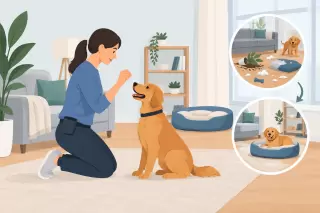
The doorbell rings, and before you can say hello, your dog is bouncing off the furniture, pawing at your guest, or trying to land a full-body hug. If you have wondered why dogs jump guests, the answer is usually not that your dog is being stubborn or trying to take charge. Jumping is a learned greeting habit, fueled by excitement, attention, and inconsistent responses from the people around them.
The good news is that greeting manners can change. The most effective plan does more than tell a dog to get down after they jump. It teaches them exactly what to do instead, then practices that behavior in the same entryway, hallway, or living room where the chaos usually happens.
Why Dogs Jump Guests in the First Place
Dogs are naturally drawn to faces and hands. When a person comes through the door, their face, voice, eye contact, and hands are all higher than the dog’s level. Jumping gets a dog closer to the action. For a social, energetic dog, that can be very rewarding.
Many dogs also learn that jumping works. A guest may laugh, speak excitedly, push the dog away, pet them, or say their name. Even a response meant to discourage the behavior can feel like attention. From the dog’s perspective, jumping made the interesting person react.
This is why a dog may jump even when you tell them “off” repeatedly. They may understand that word in a familiar, quiet moment, but a visitor at the door creates a much harder situation. There are new smells, movement, voices, anticipation, and often your own rush to answer the door. Excitement can quickly overpower a behavior that has not been practiced under distraction.
Puppies often jump because they have not yet learned another way to greet people. Adult dogs may continue because the behavior has been rehearsed hundreds of times. Some dogs jump only on certain visitors, such as children, relatives who encourage enthusiastic greetings, or delivery people they see briefly at the door. The pattern matters because it tells you what is rewarding the behavior.
Why “Just Ignore Him” Does Not Always Work
Ignoring jumping can be useful, but it is rarely enough on its own. It depends on whether everyone can truly avoid giving the dog attention and whether the dog has a clear alternative behavior to perform.
If your dog jumps, gets ignored for three seconds, then receives petting once their paws touch the floor, they may not understand what earned the attention. They may simply keep jumping until the timing happens to work. If one guest ignores the dog while another bends down to greet them mid-jump, the lesson becomes even less clear.
There is also a practical issue: not every guest can safely ignore a jumping dog. An older family member, a child, someone carrying groceries, or a person who is uneasy around dogs needs a greeting plan before the door opens. Management is not a failure in training. It is how you prevent your dog from practicing the behavior while they are still learning.
Start With a Calm Door Routine
Before asking your dog to greet anyone politely, build a routine they can handle. A leash, baby gate, exercise pen, or closed interior door can give you control while you welcome a visitor. The goal is not to isolate your dog forever. It is to stop the uncontrolled rush to the front door from becoming the first part of every greeting.
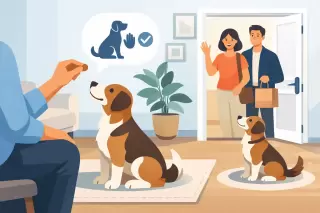
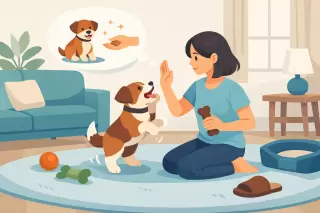
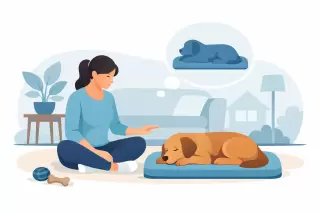
Choose one behavior that will replace jumping. For many dogs, a sit works well. For dogs who find sitting difficult when excited, standing with four paws on the floor may be a more realistic first goal. Some families prefer sending the dog to a bed or mat a few feet from the doorway. This can be especially helpful in busy homes or for dogs who become overstimulated by arrivals.
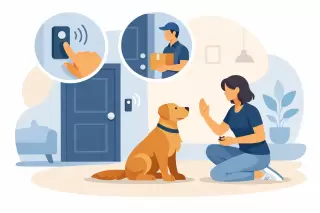
Practice the routine when no one is visiting. Walk toward the door, touch the handle, then reward your dog for staying on the floor, sitting, or remaining on their mat. Add small pieces gradually: pick up your keys, ring the doorbell from your phone, open and close the door, or have a family member step outside and come back in. Short, successful practice sessions teach more than waiting for a real visitor to test the behavior.
Teach the Greeting You Want Instead
A polite greeting should be rewarding for your dog. If sitting calmly means the visitor says hello, offers gentle petting, or gives a treat with your permission, your dog has a reason to choose it.
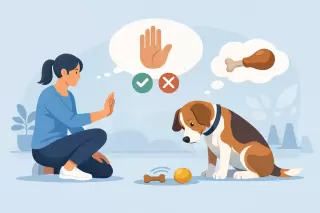
Begin with a familiar person who can follow instructions. Keep your dog on leash at first, not as a way to pull them into position, but as a safety line that prevents a leap from succeeding. Ask for the behavior your dog knows best, such as sit or place. The visitor should approach only while your dog has four paws down. If the dog jumps, the visitor quietly turns away or takes a step back. When the paws return to the floor, the visitor can approach again.
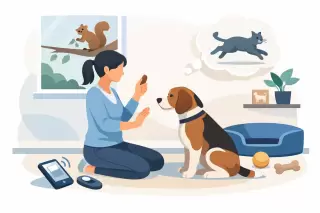
Timing matters. Reward the calm behavior immediately, before your dog has a chance to spring upward. If your dog can hold a sit for only one second at first, reward one second. Asking for too much too soon often leads to frustration for both of you.
As your dog improves, practice with different people. Dogs do not automatically generalize training. A dog who greets one calm adult beautifully may struggle with a tall neighbor in boots, a friend with an enthusiastic voice, or a child moving quickly through the hallway. Gradual variety helps the new habit hold up in real life.
Do Not Ask Guests to Train Your Dog for You
Visitors can support the plan, but they should not have to manage a difficult greeting. Give them one simple instruction before they enter: “Please wait until all four paws are down before saying hello.” Then you take responsibility for the leash, gate, treats, and timing.
This approach also protects your relationships. Guests are less likely to feel uncomfortable if they know you have a plan. You are less likely to feel embarrassed or rushed. Your dog gets clearer information because the same rules apply whether the guest is your best friend or someone arriving for the first time.
If children are visiting, use extra management. Even friendly dogs can become overly excited around fast movement and high voices. A dog may need to remain behind a gate with a chew, on a mat with an adult supervising, or in another room until the initial arrival settles down. A calm introduction later is far better than forcing a greeting your dog cannot manage.
Common Mistakes That Keep Jumping Going
The biggest mistake is inconsistency. If jumping is allowed when you come home but not when guests arrive, your dog has to guess which situation follows which rules. You do not have to eliminate affection or enthusiasm. You simply need to deliver it when your dog is on the floor.
Another common mistake is repeating cues during a high-excitement moment. Saying “sit, sit, sit” while your dog is launching toward the door teaches them that the cue is background noise. Instead, make the situation easier. Increase distance from the guest, use a barrier, and ask for the behavior when your dog is capable of responding.
Physical corrections can create other problems. Pushing a dog down, kneeing them away, or using harsh leash pressure may increase excitement, cause fear around guests, or turn greetings into a confrontation. It may stop the jump in that instant without teaching the dog a better answer for next time.
Finally, avoid expecting a tired dog to be a trained dog. Exercise can take the edge off for some dogs, but a long walk does not automatically teach polite greetings. Your dog still needs a clear routine and consistent practice.
When Jumping Is More Than Excitement
Most jumping is social and energetic, but some dogs jump because they are anxious, frustrated behind a barrier, or conflicted about strangers entering the home. Watch for stiff posture, hard staring, growling, barking that escalates, retreating and rushing forward, or snapping. In those cases, do not encourage guests to greet the dog or try to work through it casually at the door.
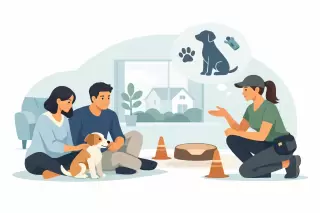
A personalized training plan can help identify what your dog is communicating and create safer steps for your household. This is where in-home coaching can be especially valuable: the entryway setup, family routines, visitor patterns, and your dog’s triggers can all be addressed where they actually occur.
At K9 Manners, training focuses on practical communication that fits daily life, not expecting your dog to perform perfectly in a setup that never resembles your home. With patient practice, your dog can learn that guests arriving does not mean losing control. It can mean going to their spot, keeping four paws on the floor, and earning the attention they wanted all along.