A dog who can settle is not necessarily a dog who never gets excited. It is a dog who can come back down after excitement – when the doorbell rings, dinner is being made, the kids are moving around, or visitors arrive. If you have been searching for how to teach settle command, the goal is not to make your dog stay perfectly still for hours. The goal is to give them a clear, rewarding way to relax.
For many families, this is one of the most useful skills they can teach at home. A reliable settle can reduce jumping, pacing, demand barking, food stealing, and the constant feeling that your dog has to be involved in everything.
What the Settle Command Means
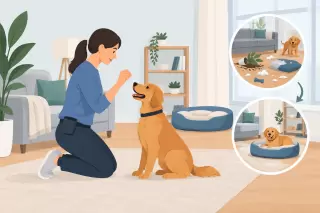
“Settle” should mean: go to your bed or mat, lie down, and relax there until you are released. The behavior has a physical part – going to the designated spot – and an emotional part – lowering the level of excitement.
That distinction matters. A dog can technically lie down while staring at the front door, whining, or ready to launch at the slightest movement. At first, reward the position. Over time, begin rewarding the softer signs of genuine calm: a hip rolled to one side, a lowered head, slower breathing, or a relaxed sigh.
Some owners use “place” and “settle” as the same cue. That can work, as long as everyone in the household uses it consistently. Others use “place” to mean go to a mat and “settle” to mean relax once there. The words matter far less than the clarity of the routine.
Start With the Right Setup
Choose a portable bed, mat, or blanket that is comfortable enough for your dog to want to stay on. A non-slip bath mat, raised cot, or dog bed can all work. The best choice depends on your dog. A senior dog may need extra cushioning, while a busy young dog may do better with a simple, easy-to-move mat.
Begin in the quietest room of your home, at a time when your dog has had a chance to use the bathroom and release some energy. Trying to teach relaxation when your dog is overdue for a walk or bursting with excitement is frustrating for everyone.
Have small, soft treats ready. In early sessions, use rewards your dog genuinely likes. If regular kibble does not hold their attention, choose something more appealing, then reduce the value of the treats as the behavior becomes familiar.
How to Teach a Settle Command Step by Step
Make the Mat a Good Place to Be
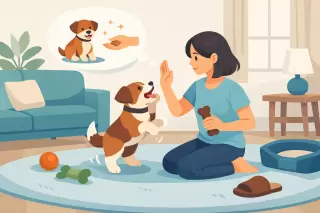
Put the mat on the floor and let your dog notice it. The moment they look at it, move toward it, or place a paw on it, calmly mark the choice with a word such as “yes” and place a treat directly on the mat.
Do not rush to give the verbal cue. At this stage, you are building a simple association: being on this mat pays well. Repeat until your dog is deliberately stepping onto it because they expect something good to happen.
Once all four paws are landing on the mat regularly, wait for a sit or down. Many dogs will offer a down naturally when treats are delivered low and slowly between their front paws. If your dog already knows “down,” you may cue it once they are on the mat, then reward generously.
Add the Cue After the Behavior Is Happening
When your dog is reliably moving to the mat and lying down, say “settle” just before they step onto it. Then reward them when they arrive and lie down. Saying the cue before the movement helps your dog connect the word to the action.
Keep your voice calm and matter-of-fact. Repeating “settle, settle, settle” teaches your dog that the first word was optional. Say it once, give them a moment to respond, and then help with a familiar gesture or by standing near the mat if needed.
At first, reward every few seconds your dog remains on the mat. Place treats between their paws rather than holding them up high. Low, quiet rewards encourage your dog to stay down instead of popping up for the next treat.
Build Time Before You Build Distractions
This is where many well-meaning owners move too quickly. If your dog can settle for 30 seconds in a quiet kitchen, that does not mean they are ready to hold the behavior while someone unloads groceries or rings the doorbell.
Add duration in small pieces. Reward after three seconds, then five, then eight, then 12. Vary the timing so your dog does not start standing up exactly when they expect a treat. If they get up, quietly guide them back or reset the exercise. Avoid scolding. Getting up usually means the session became too difficult, too long, or too distracting.
Use a clear release word such as “free,” “okay,” or “all done.” Walk over to your dog and release them before they choose to leave on their own. This teaches that staying put is what earns freedom.
Add Real-Life Practice Gradually
Once your dog understands the cue in a quiet room, use it during ordinary moments around the house. Ask for a settle while you fold laundry, make coffee, answer an email, or sit down for a meal. These short, successful repetitions are more valuable than one long session that leaves your dog frustrated.
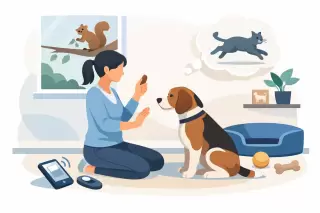
Then introduce mild distractions one at a time. Take one step away and return. Sit in a chair. Open a cabinet. Pick up your keys. Reward your dog for staying relaxed through each new detail.
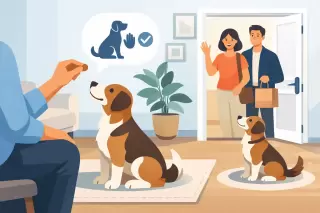
Visitors are often the real test. Do not start by asking your dog to settle through a crowded family gathering. Practice with one calm person first. Have your dog settle before the person enters, and reward frequently while the visitor comes in and sits down. If your dog breaks position, reduce the difficulty. The visitor may need to ignore the dog, move more slowly, or stay farther away at first.
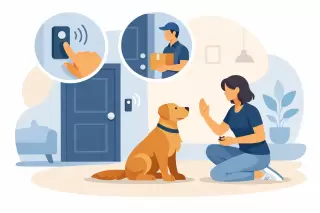
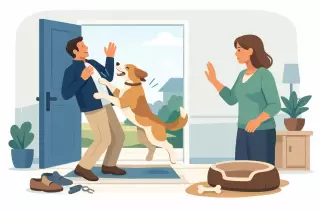
For dogs who become overly excited at the front door, the settle command works best alongside door-management practice. A baby gate, leash, or closed interior door may be needed while your dog is learning. Management prevents your dog from rehearsing jumping and rushing the entryway every day.
Common Problems and What They Usually Mean
If your dog will not stay on the mat, the duration is probably too long or the reward rate is too low. Go back to easier repetitions and reward more often.
If your dog grabs treats, spins, or becomes more excited, slow the exercise down. Deliver treats quietly and use a lower-value reward if food is creating too much arousal. For some dogs, a calm chew or stuffed food toy on the mat can help build a longer relaxation habit, but only use one if your dog can enjoy it safely without guarding.
If your dog settles only when they see treats, begin rewarding from your pocket rather than showing the food first. The cue should predict the reward, not the sight of the reward predict the behavior.
If your dog is whining, trembling, barking, or unable to disengage from a trigger, do not treat the settle command as a fix for fear or reactivity. Asking an overwhelmed dog to lie still can increase stress. Create more distance from the trigger, lower the pressure, and work with a qualified trainer on the underlying behavior.
Make Settle Part of Your Daily Routine
A settle command becomes dependable through repetition in normal life, not by practicing only when company is coming. Use it before meals are prepared, during family movie time, when children are playing nearby, or while you bring groceries inside.
Keep expectations fair. Puppies have shorter attention spans, adolescent dogs often test boundaries, and high-energy dogs may need exercise and enrichment before they can truly relax. A settle cue is not a substitute for walks, play, sniffing, training, or rest. It is a skill that helps your dog shift from activity to calm when those needs have been met.
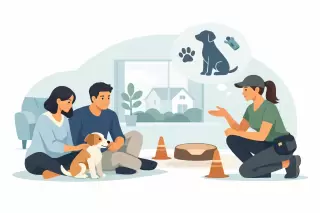
If the behavior is difficult in your particular home, personalized coaching can make a major difference. The layout of the room, the timing of family routines, and the situations that trigger your dog all affect the plan. K9 Manners works with owners in their home because that is where a calm routine has to hold up.
Your dog does not need to become a different personality to learn how to settle. With a comfortable spot, clear communication, and many small successes, even a lively dog can learn that relaxing near the family is a rewarding job of its own.