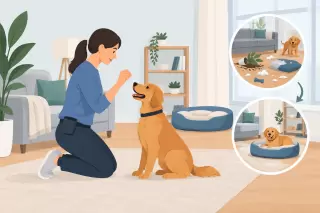
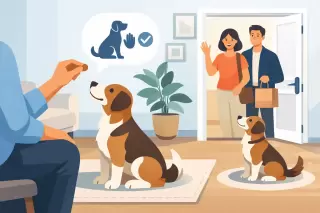
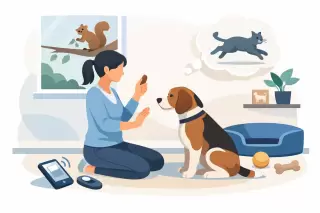
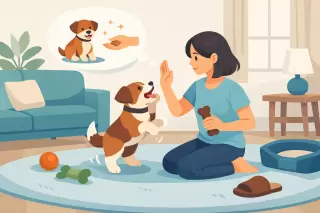
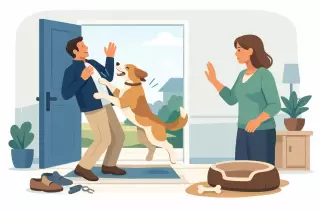
A doorbell can turn a peaceful afternoon into a full-house emergency in seconds: barking, racing to the entryway, jumping on whoever comes through the door, and ignoring every cue they know. To train dog around doorbells effectively, start by recognizing that the sound itself is rarely the whole problem. For many dogs, the bell predicts excitement, strangers, movement, and a chance to rush the front door.
The goal is not necessarily to make your dog silent or indifferent to every visitor. A brief alert bark can be normal. The practical goal is a dog who hears the bell, looks to you for direction, and can remain safely away from the door while you handle the visitor.
Why Doorbells Trigger Big Reactions
Doorbells are powerful because they are consistent predictors. Unlike a random noise outside, the bell nearly always means someone is about to enter your dog’s space. If guests have arrived to enthusiastic greetings in the past, your dog has also learned that barking, charging the door, and jumping are part of the event.
Some dogs react because they are thrilled to see people. Others are worried about unfamiliar visitors. A territorial dog may feel responsible for driving people away, especially when the person leaves shortly after the barking starts. Dogs do not interpret that as a scheduled delivery or a polite goodbye. They may believe their behavior worked.
That difference matters. An excited dog can often learn a calmer greeting routine fairly quickly. A fearful, defensive, or reactive dog needs more distance, slower exposure, and a plan that puts safety ahead of greeting visitors. Do not force a nervous dog to meet people at the door just because you are working on doorbell behavior.
Train Dog Around Doorbells by Teaching a New Job
Most owners understandably say, “Stop barking.” But that does not tell the dog what to do instead. Training becomes much clearer when the doorbell means a specific job: go to a mat, wait behind a gate, or move to a designated room.
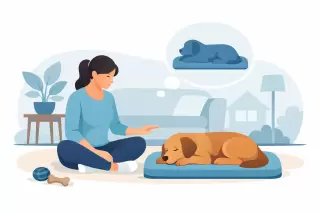
Choose one location that is far enough from the entryway to prevent crowding. A bed, mat, or rug in the living room can work well. For dogs that become highly aroused, a room behind a closed door may be the better starting point. The right setup depends on your dog, your home layout, and whether the front door opens directly into your main living area.
Before adding the bell, teach the location cue when nothing exciting is happening. Say “place,” “bed,” or your preferred cue, guide your dog to the spot, and reward them there. Build duration gradually. At first, reward after one or two seconds of staying put. Over several short sessions, work toward your dog remaining there while you take a few steps away, touch the doorknob, or walk toward the front hall.
A dog does not need a perfect, competition-level stay. They need a reliable enough habit that you can answer the door without managing a bouncing, barking body at the same time.
Add the Doorbell at Low Intensity
Once your dog understands their new job, introduce the sound in a controlled way. If possible, use a doorbell recording at low volume. Play it once, immediately give the place cue, and reward your dog generously when they move to their spot. Keep sessions brief, with only a few repetitions.
If a recording is not practical, ask a family member or friend to ring the bell once while you remain ready to guide your dog. The visitor should not come inside during early practice. The bell rings, your dog goes to their place, and good things happen there. That is enough for the first stage.
Do not increase the difficulty because one repetition went well. Your dog may handle a soft recording but struggle when the real bell rings, someone knocks, a package is set down, and voices are heard outside. Change one piece at a time: volume, duration, the presence of a person outside, or the opening of the door.
Make the Reward Worth Choosing
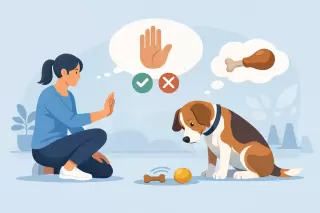
The front door is competing with a lot of excitement. For many dogs, regular kibble will not be persuasive enough at the beginning. Use small, soft treats your dog truly enjoys, and deliver several in a row while they stay on their mat or behind the gate.
This is not bribery. You are building a new association: doorbell sounds predict moving away from the door and receiving something positive from you. With enough repetitions, the sound begins to prompt the calm routine rather than the frantic one.
Timing matters. Reward the behavior you want as soon as it happens. If your dog barks once, then turns toward you and heads to their place, reward that choice. Waiting for total silence before you acknowledge them can slow progress, especially with dogs that have a long history of barking at arrivals.
Avoid yelling over the noise. From your dog’s perspective, raised voices can add energy and confusion to an already charged moment. Calm, clear movement and consistent cues will help more than repeated commands from across the room.
Practice the Full Visitor Routine
A trained response to the sound alone is only the beginning. Your dog also needs practice while you open the door and speak with someone. Set up rehearsals with a helper who understands they are there to train, not to greet the dog right away.
Start with your dog settled in their station. Have the helper ring the bell. Cue your dog to their spot, reward them, and open the door only a few inches. Close it again before your dog becomes too excited. Repeat that stage on another day, then progress to opening the door wider, talking briefly, and eventually allowing the helper inside.
If your dog gets up, barks intensely, or rushes forward, the exercise was too difficult. Simply reset and make the next repetition easier. That may mean moving the mat farther away, using a baby gate, shortening the interaction, or having the helper stand farther from the doorway.
For many households, management remains part of the long-term solution. A gate, leash, crate, or closed room is not a training failure. It is a sensible safety tool when children, delivery drivers, elderly relatives, or unfamiliar visitors are involved. Training improves choices, while management prevents your dog from rehearsing the behavior you are trying to change.
Set Clear Rules for Guests
Visitors often undo good work without realizing it. Someone who leans over your dog, talks excitedly, or invites jumping can turn the doorway into a reward for over-the-top behavior. Let guests know what you need before they arrive when possible.
Ask them to ignore your dog at first. No eye contact, petting, or high-pitched greetings while your dog is barking or pulling toward them. When your dog is calm, you can decide whether a greeting is appropriate. Some dogs are happiest staying on their mat with a chew or treat while guests enter, and that is perfectly acceptable.
For dogs that enjoy meeting people, a greeting can become the reward for calm behavior. Your dog stays at their place, waits while the guest enters, and is released to say hello only when their body is loose and all four paws are on the floor. If jumping begins, the guest calmly turns away and the dog is guided back to their station.
Consistency from everyone in the home is what makes this routine dependable. If one person allows door-rushing while another expects a mat stay, your dog receives mixed information.
When Barking Signals Fear or Aggression
Treat doorbell training as a safety concern if your dog stiffens, growls, snaps, lunges, shows teeth, or cannot settle once a visitor is inside. Do not test whether your dog will “get used to it” by bringing people closer. Prevent access to the door and work at a distance where your dog can still respond to food and cues.
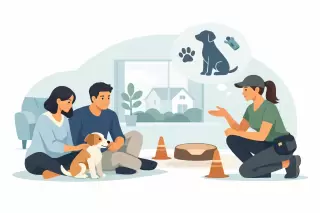
Dogs with fear-based reactions often need a more individualized plan. Their body language, trigger distance, visitor history, and household setup all affect the right approach. This is one reason in-home training can be especially helpful: the front entry, hallway, windows, family routines, and dog’s resting areas all shape the behavior.
K9 Manners works with owners on the real-life details that group settings cannot easily reproduce, including how to set up the entryway and what each family member should do when the bell rings.
Keep Real-Life Expectations Reasonable
Your dog may be calm for planned practice but lose focus when a delivery arrives during dinner or relatives show up with children. That does not erase the training. It tells you that the situation is harder than your current practice level.
Keep a treat container near the entryway, use your management tools before opening the door, and continue short practice sessions between real arrivals. Over time, a doorbell can become less of an alarm and more of a familiar cue that says: go to your spot, wait, and let your person take care of it.